How Cassava Root Freshness, Variety and Cyanide Handling Affect Starch Yield
Cassava starch yield starts before the rasper. It starts at harvest timing, root transport, intake inspection and the way the factory handles natural cyanogenic compounds in the root.
For a cassava starch factory, root quality is not a soft purchasing topic. It determines slurry behavior, screen load, hydrocyclone stability, starch brightness, fiber carryover, wastewater load and the realistic value of any enzyme program.
ManiFlow Catalytics works as an enzyme supplier for cassava starch processing with a practical view: enzymes can improve release, viscosity control and separation efficiency, but they cannot fully compensate for poor root handling, excessive storage delay or uncontrolled variety variation. The best results come when root procurement, process control and enzyme dosing are managed together.
Why freshness has such a direct impact on starch recovery
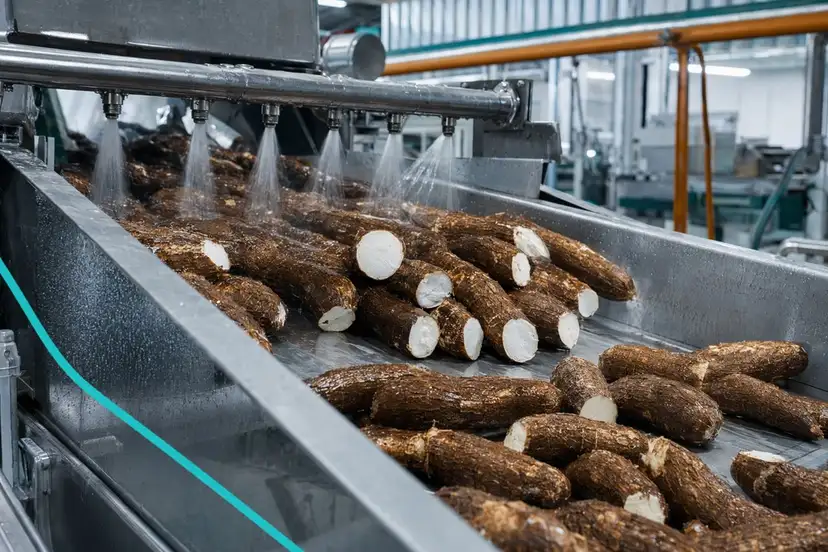
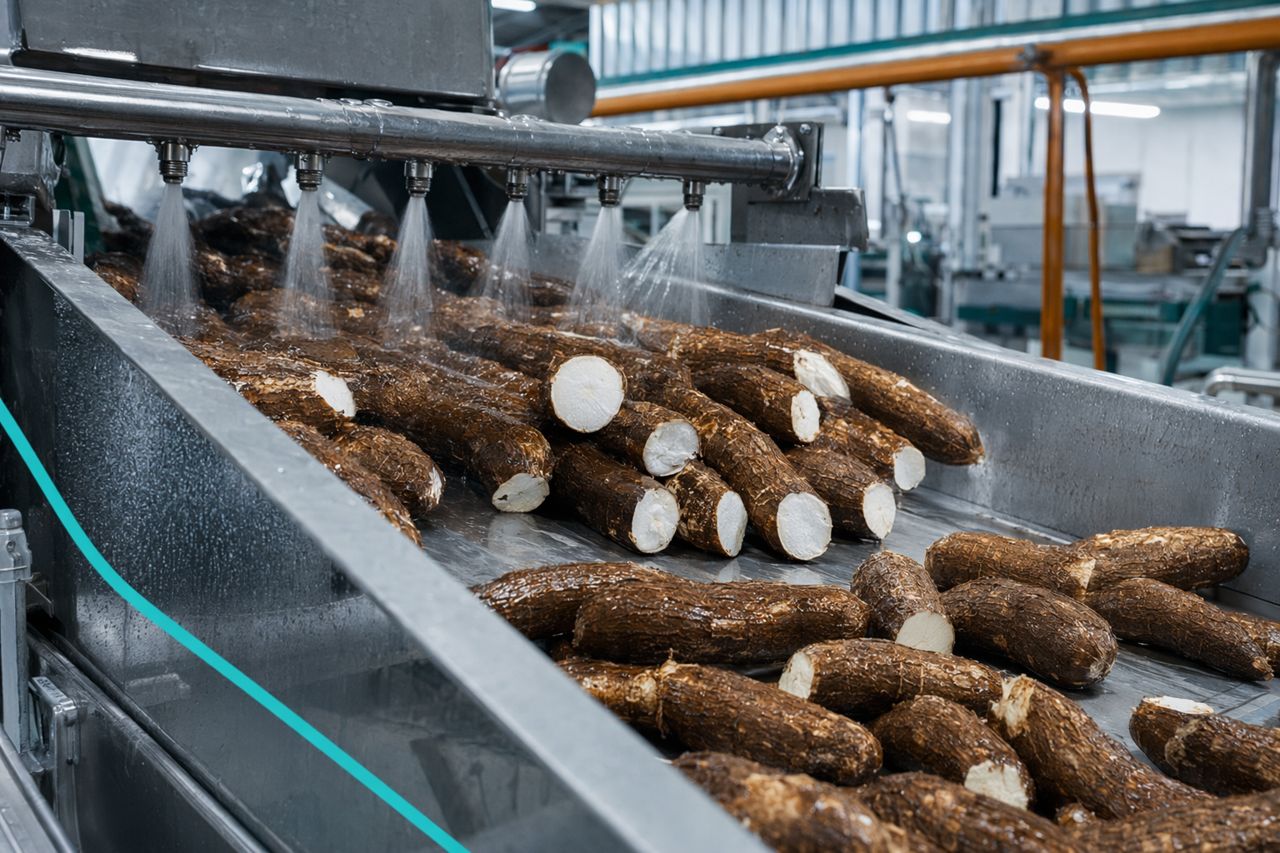
Fresh cassava roots generally rasp cleaner, release starch granules more consistently and produce a slurry that is easier to wash, screen and separate. Once roots sit too long after harvest, quality begins to shift.
Common plant-floor signs include:
- darker root tissue and higher risk of off-color starch
- softer, fermented or partially deteriorated root zones
- less predictable rasping behavior
- more fines, peel fragments and fiber load in the slurry
- higher organic load into process water and effluent systems
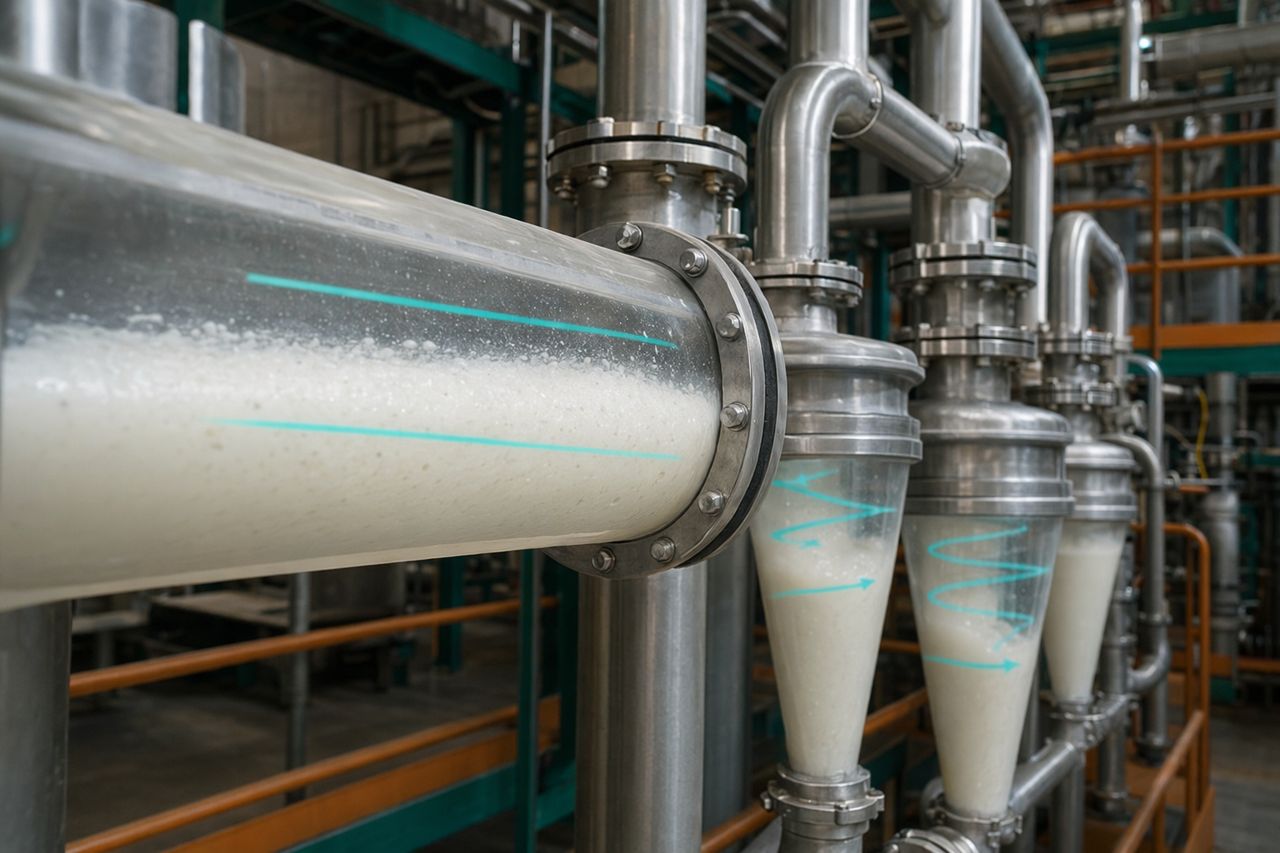
- less stable separation through screens, nozzles and hydrocyclones
The issue is not only starch percentage in the incoming root. It is how accessible that starch remains during processing. Fresh roots break down in a more predictable way. Deteriorated roots can create sticky, variable slurry behavior that raises separation losses and makes operators chase settings shift by shift.
Practical freshness controls that protect yield
Factories can reduce avoidable starch loss by tightening several basic controls:
- Shorten harvest-to-process time where possible, especially during hot and wet periods.
- Segment root lots by arrival condition instead of blending fresh and deteriorated roots without visibility.
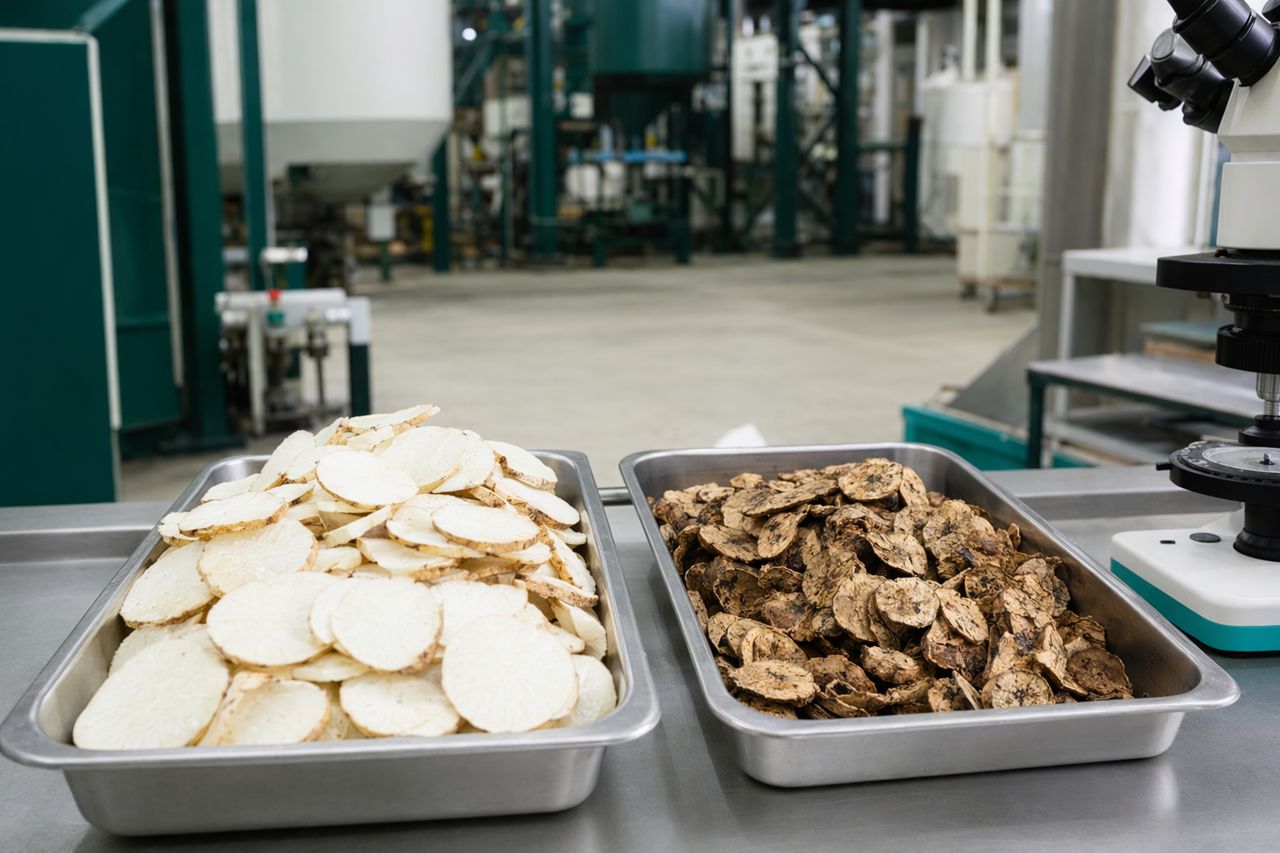
- Inspect cut surfaces for darkening, fermentation, fibrous zones and odor before unloading into the main flow.
- Reduce root damage during transport because bruised roots deteriorate faster.
- Keep intake records tied to process results so procurement learns which sources create stable yield and which create recurring losses.
Enzyme programs become more reliable when the factory knows what is entering the line. Dose discipline depends on raw material discipline.
Variety affects more than starch content
Cassava varieties differ in dry matter, starch concentration, fiber structure, peel ratio, granule release behavior and cyanogenic potential. Two root lots can look similar on a truck but behave differently in the rasping and separation area.
A high-starch variety with difficult fiber behavior may still create losses if granules remain trapped in pulp. A variety with good release behavior may give cleaner separation, lower recycle load and more stable brightness. The best variety for a starch factory is not always the one with the highest theoretical starch content. It is the one that delivers the best combination of starch recovery, process stability and finished product quality.
What plant teams should track by variety
Useful variety-linked observations include:
- rasping energy and pulp texture
- starch milk consistency after extraction
- screen blinding frequency
- fiber carryover into starch milk
- hydrocyclone pressure stability and underflow behavior
- brightness trend after washing and drying
- wastewater load during campaigns
- enzyme dose response under comparable operating conditions
This information turns variety selection from a farm-side preference into a factory-side performance decision.
Cyanide handling is a process control issue, not just a compliance topic
Cassava naturally contains cyanogenic compounds, with levels influenced by variety, growing conditions and root tissue distribution. In starch production, proper handling helps protect operators, finished product quality, wastewater treatment performance and overall process consistency.
Factories typically manage this through good peeling, washing, rasping control, ventilation, water management and separation discipline. Poor control can increase risk in the intake and wet processing area while also pushing more soluble load into process water.
From a yield point of view, cyanide handling connects with root freshness and tissue breakdown. Damaged or deteriorated roots can release more soluble material into the system, increasing variability in slurry behavior and water load. That variability can affect how cleanly starch granules separate from fiber, protein, soluble material and fine impurities.
Where enzymes fit into cassava starch yield improvement
Enzymes are most useful when they are applied to a clearly defined processing bottleneck. In cassava starch factories, the target is often one or more of the following:
- improving starch release from fibrous pulp
- reducing viscosity where thick slurry limits washing or separation
- improving screen flow and reducing pulp losses
- supporting cleaner hydrocyclone operation
- reducing organic load sent to wastewater treatment
- stabilizing performance when root lots vary within realistic limits
The enzyme decision should not be treated as a generic additive purchase. It should be matched to root quality, variety behavior, process water design, retention time, temperature window, pH range and the factory’s loss points.
As an enzyme supplier for cassava starch processing, ManiFlow Catalytics focuses on practical fit: what problem is limiting recovery, where the enzyme should be introduced, how operators can control the dose, and how procurement can reduce supply risk without overcomplicating the line.
Fresh roots make enzyme performance easier to control
When root quality is stable, enzyme response is easier to read. Operators can see whether a change is improving slurry flow, fiber release, screen performance or separation stability. When root quality swings heavily, the plant may mistake raw material variation for enzyme variation.
That is why we recommend pairing enzyme trials with intake records. A useful trial should capture:
- root age and supplier source
- variety or variety group where known
- visible deterioration level
- process water condition
- slurry temperature trend
- addition point and contact time
- screen and hydrocyclone behavior
- starch loss in pulp or overflow streams
- finished starch brightness and moisture stability
The goal is not to create paperwork for its own sake. The goal is to make the dose decision defensible.
Root quality problems enzymes cannot fully fix
A good enzyme program can improve processing efficiency, but it should not be used to hide avoidable intake problems. Enzymes cannot fully reverse severe root deterioration, heavy soil contamination, poor peeling, uncontrolled dilution, overloaded screens or unstable hydrocyclone operation.
If the factory is losing starch because the roots are too old, too damaged or too mixed in quality, procurement and intake control must be part of the solution. If the factory is losing starch because granules remain bound in pulp, slurry is too viscous, or separation is limited by fiber behavior, enzymes may provide a measurable process advantage.
The distinction matters because it protects operating cost. It also prevents the common mistake of increasing dose when the real problem is raw material variability or mechanical bottlenecking.
A practical decision framework for plant managers
Use these questions before changing enzyme strategy:
-
Is the root supply stable enough to evaluate performance?
If not, segment lots and compare like with like.
-
Where is starch being lost?
Pulp, screen rejects, overflow, wastewater or finished product downgrade each points to a different fix.
-
Is the slurry too thick, too dirty or too variable?
Viscosity and impurity load affect washing and separation differently.
-
Are cyanide-related handling steps controlled?
Peeling, washing, ventilation and water management influence both safety and process load.
-
Can operators dose consistently?
Enzyme value depends on repeatable addition, not one-off adjustment.
-
Does procurement understand the quality cost of cheap roots?
Lower root price can be erased by lower yield, darker starch, higher wastewater load and higher reprocessing burden.
What to expect from a focused enzyme supplier
A serious supplier should help your team connect root quality to plant performance. That means asking about process flow, raw material variability, loss points, water use, separation equipment and finished starch targets before recommending a product.
For cassava starch factories, supplier reliability also matters. Production campaigns cannot wait for uncertain lead times or inconsistent product documentation. Procurement needs dependable availability, clear specification support and practical guidance for trials and scale-up.
ManiFlow Catalytics supports factories that want enzyme programs built around real operating conditions: root freshness, variety behavior, cyanide handling, slurry flow and separation performance.
Request a quote
If your cassava starch line is dealing with variable root quality, pulp starch loss, unstable slurry viscosity or separation inefficiency, contact ManiFlow Catalytics through the on-site request a quote form. Share your process goal, root quality pattern and current bottleneck, and our team will help identify the most practical enzyme approach for your factory.