Export-grade tapioca starch is made before the final dryer
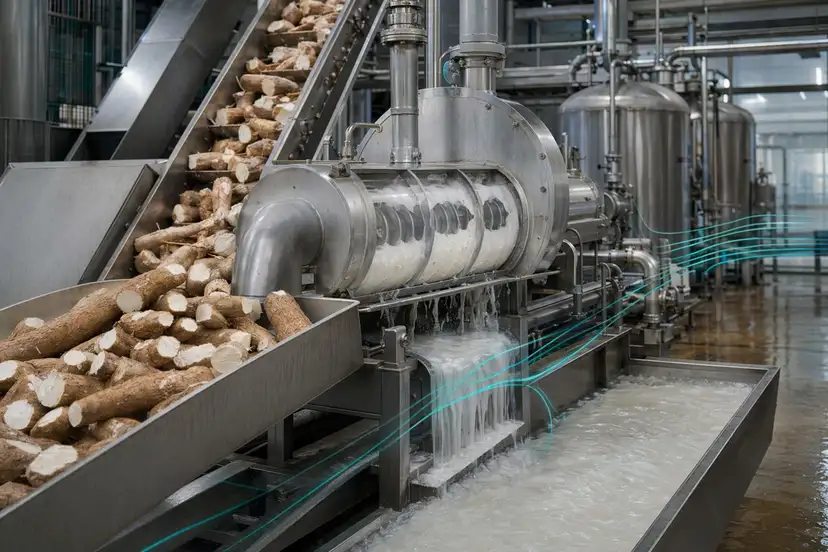
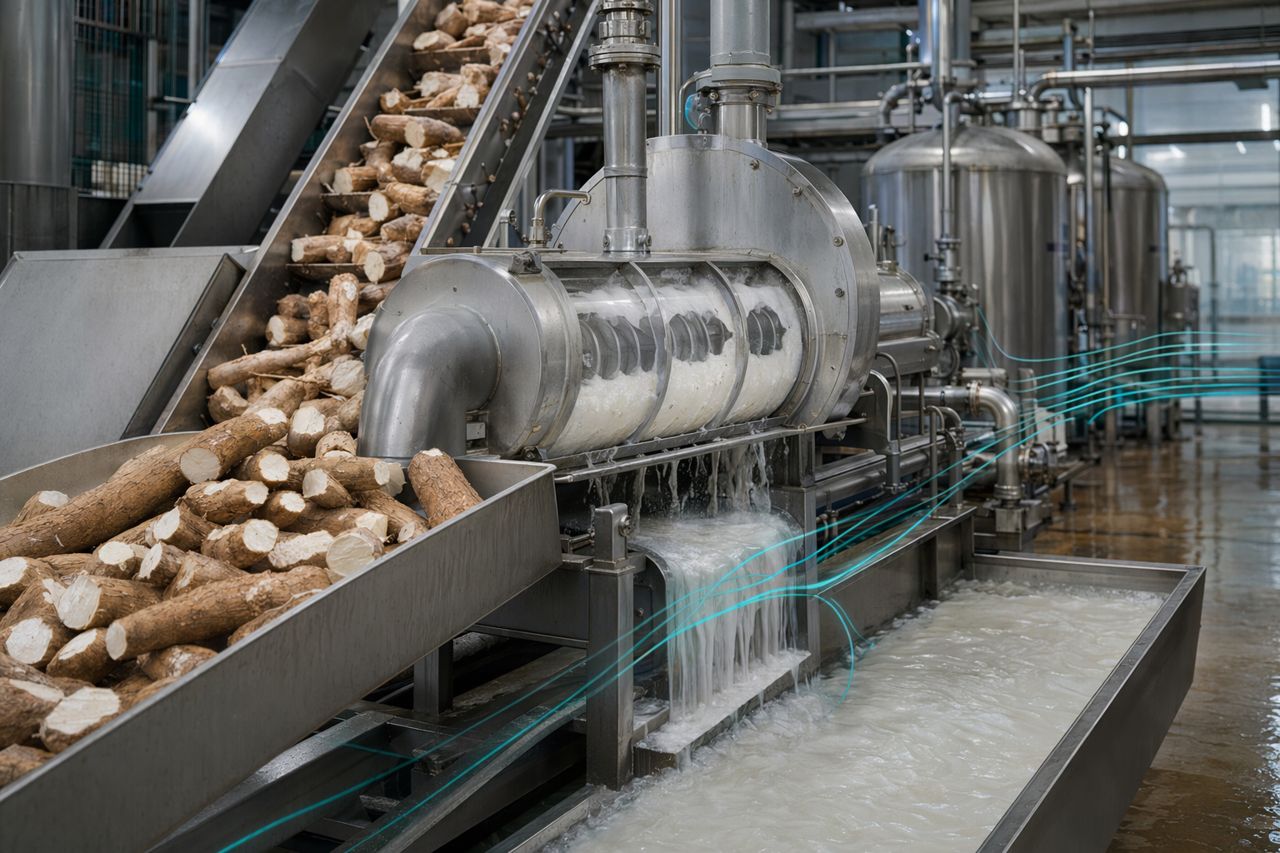
Export buyers judge tapioca starch by what lands in the bag: whiteness, ash, moisture, viscosity profile, odor, granulation, and shipment consistency. But most export-quality risk is created much earlier, while roots are being washed, rasped, extracted, separated, refined, dewatered, and dried.
For a cassava starch factory, the practical question is not only whether the final certificate passes. It is whether the plant can keep passing when root freshness changes, fiber load rises, water quality shifts, centrifuge performance drifts, or the dryer is pushed harder to meet loading schedules.
ManiFlow Catalytics supports cassava processors with enzyme programs built for plant-floor realities: variable roots, abrasive fiber, slurry viscosity, hydrocyclone balance, dose discipline, and predictable supply. If you are evaluating an enzyme supplier for cassava starch processing, start with the export specs you must protect, then work backward through the process variables that move them.
The four export specs that usually expose process instability
1. Whiteness
Whiteness is influenced by root quality, peel carryover, soil removal, sulfite or bleaching discipline where used, microbial condition, residence time, and how effectively fine fiber and colored impurities are removed before drying.
Common plant-floor causes of whiteness loss include:
- Over-aged or damaged roots entering production
- Incomplete washing and peel removal
- High fiber fines in extracted starch milk
- Long holds in warm slurry conditions
- Poor separation between starch, fiber, protein, and soluble impurities
- Dryer overheating, uneven moisture removal, or excessive recirculation
Enzyme support can help by opening fiber-rich plant material during extraction and improving the release of bound starch. When fiber is better disrupted and separated, the refining system has less contaminant load to carry into the final starch fraction.
2. Ash
Ash is a signal that mineral and non-starch residues are not being controlled tightly enough. It can move with root soil load, wash-water quality, process water recirculation, peeling efficiency, and cyclone/refining performance.
Ash problems are often not solved at one single point. They require disciplined control across washing, extraction, separation, water balance, and final product handling.
Practical actions include:
- Keeping root washing aggressive enough without damaging throughput
- Avoiding soil carryover into rasping
- Monitoring process water quality and recirculation loops
- Reducing fiber and peel fines entering the starch stream
- Checking hydrocyclone pressure balance and underflow behavior
- Preventing cross-contamination from worn screens, seals, or product contact surfaces
A well-selected enzyme program can reduce the mechanical burden by improving starch release from fibrous material. The goal is cleaner separation, not chemical masking.
3. Moisture
Moisture is where export compliance meets shipping risk. Starch that is too wet can create caking, microbial concern, container damage, and buyer claims. Starch that is over-dried can waste energy, reduce throughput, and create unnecessary handling stress.
Moisture variability is usually linked to:
- Uneven dewatering cake quality
- Variable feed solids to the dryer
- Poorly controlled dryer residence conditions
- Inconsistent centrifuge or vacuum filter performance
- Lumps, wet pockets, or unstable conveying after drying
- Weather-related humidity and packaging timing
Enzymes do not replace dryer control. Their value is upstream: when slurry and separation behavior are more predictable, dewatering feed is more consistent, and the dryer is not forced to compensate for unstable process conditions.
4. Viscosity
For export buyers using tapioca starch in food, paper, adhesive, textile, or industrial formulations, viscosity behavior matters. Final viscosity can be affected by starch damage, microbial activity, process temperature, pH drift, residence time, and non-starch carryover.
A factory may produce starch that looks bright but still creates buyer complaints if paste behavior is inconsistent lot to lot.
Key watchpoints include:
- Rasping severity and starch granule damage
- Holding time before separation and drying
- Temperature exposure during process delays
- Residual fiber, protein, and soluble impurities
- Microbial condition of roots and process water
- Overcorrection with processing aids
The right enzyme strategy should support controlled release and separation while protecting the functional character of the starch. Dose discipline matters: more is not automatically better.
Where enzymes can help in a cassava starch factory
Enzymes are not a substitute for sound mechanical design, clean water, trained operators, or disciplined maintenance. They are a process tool for improving how cassava tissue breaks down, how starch separates from fiber, and how the slurry behaves under real factory conditions.
Typical value areas include:
- Better starch liberation from root cell-wall material
- Reduced bound starch loss in pulp and fiber streams
- More stable slurry flow through screens, pumps, and hydrocyclones
- Improved separation efficiency in refining stages
- Lower suspended solids pressure in wastewater streams
- Reduced variability when root age and variety shift
- Cleaner dewatering feed and more predictable dryer loading
For export-grade production, the commercial value is straightforward: more consistent product quality, fewer downgrade events, less rework, and better confidence when accepting export orders.
Process variables that move export quality before anyone sees the lab result
Root freshness and receiving discipline
Cassava roots deteriorate quickly after harvest. Delayed processing can increase discoloration risk, microbial load, and variability in starch recovery. A factory that wants export-grade tapioca starch needs receiving discipline before enzyme optimization begins.
Recommended controls:
- Segregate damaged, rotten, or heavily soiled roots
- Avoid long holding times under heat and rain exposure
- Track root source, variety, harvest timing, and field condition
- Maintain a practical first-in, first-processed flow
- Adjust process settings when root lots change
Enzymes perform best when the incoming raw material is understood. A supplier should ask about your roots, not just your target output.
Washing, peeling, and soil control
No enzyme program can economically correct heavy soil carryover. Soil and peel particles influence ash, color, equipment wear, and downstream separation load.
Plant managers should watch for:
- Soil breakthrough after peak receiving periods
- Worn washer paddles or low-impact washing zones
- Excessive peel fragments in the rasping feed
- Process water loops that reintroduce fines
- Sudden ash movement after rainfall or field changes
The cleaner the root stream, the more effectively enzymes can focus on starch release and fiber opening rather than fighting avoidable contamination.
Rasping and extraction balance
Rasping must open the root structure enough to release starch without creating excessive fine fiber or starch damage. When rasping is too gentle, starch is lost in pulp. When it is too aggressive, separation becomes harder and viscosity behavior may suffer.
An enzyme-supported extraction program should be tuned around:
- Rasper condition and blade wear
- Feed consistency and root hardness
- Extraction screen loading
- Pulp moisture and residual starch appearance
- Pump shear and slurry residence time
- Downstream separator capacity
The objective is not simply stronger breakdown. It is cleaner release with a slurry the rest of the factory can handle.
Slurry behavior and dose discipline
Cassava slurry is not static. It changes with root age, fiber load, starch concentration, water quality, temperature, and residence time. Enzyme dosing must respect those changes.
A practical supplier will help define:
- Where to dose for contact without creating hold-up risk
- How to adjust during root quality swings
- What visual and operating signals operators should watch
- How to avoid overdosing when throughput slows
- How to maintain stable performance across shifts
Dose discipline protects both quality and cost. It also helps procurement defend the program internally because the spend is tied to measurable plant outcomes.
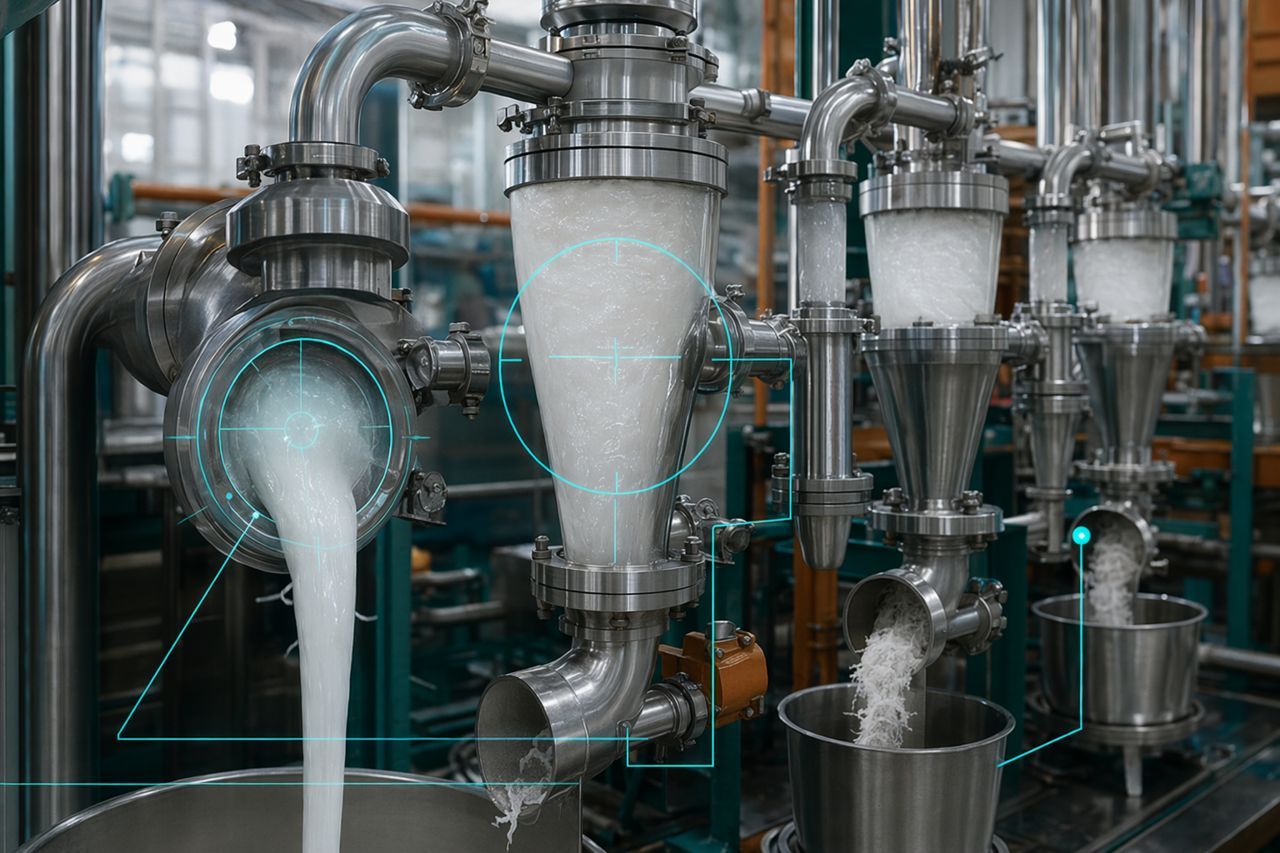
Hydrocyclones, screens, and refining load
Export quality depends heavily on the refining section. If fiber fines, proteins, solubles, and minerals are not removed consistently, whiteness, ash, and viscosity all become harder to control.
Watch the operating signs:
- Rising pressure instability
- Poor underflow consistency
- Excessive recirculation
- More frequent screen cleaning
- Increased starch in reject streams
- Cloudier process water loops
When enzymes improve upstream release and fiber behavior, the refining system can often run with less stress. This supports cleaner separation and more stable quality before dewatering.
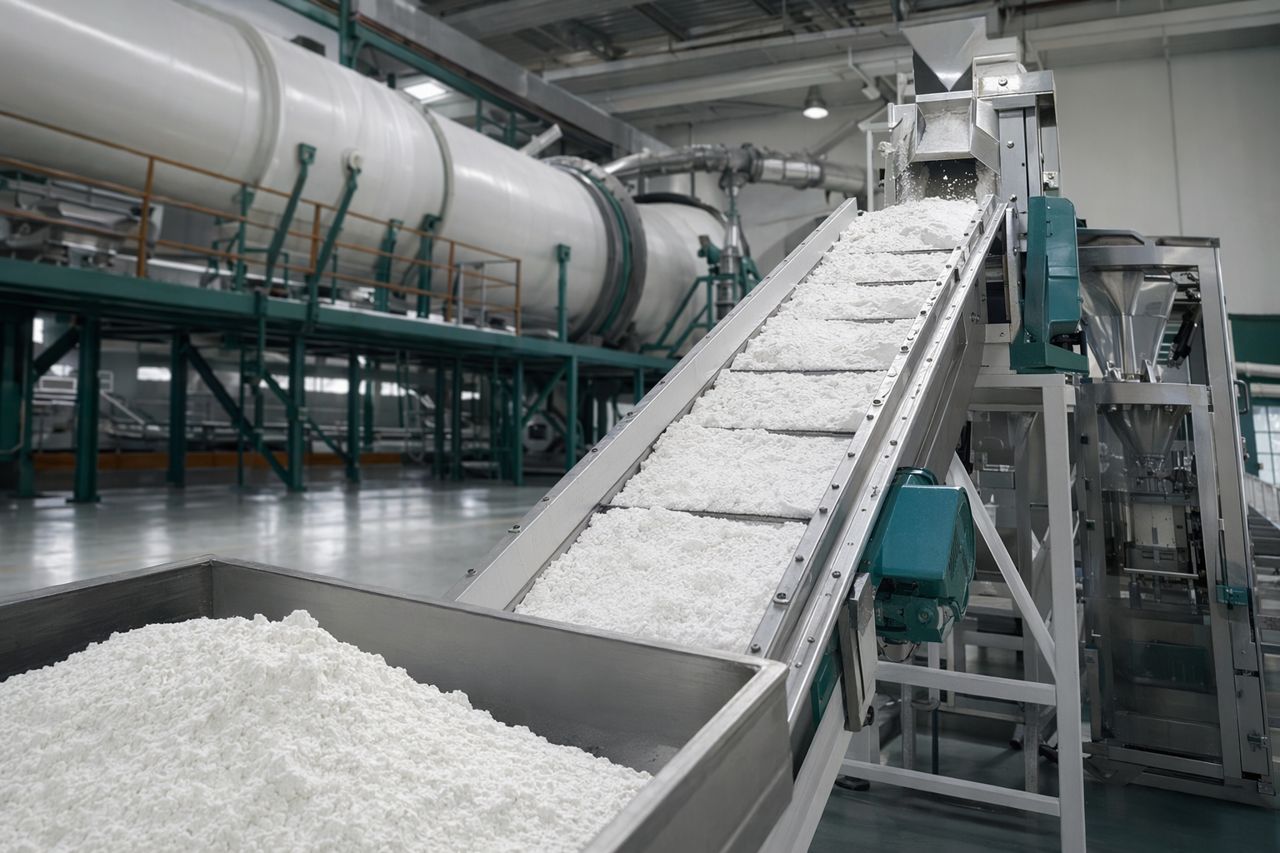
Dewatering and drying stability
Dewatering and drying do not create clean starch; they preserve or damage what upstream processing has already produced. A stable feed helps operators protect final moisture, appearance, and bulk handling.
Key controls include:
- Consistent feed solids into dewatering
- Clean filtration or centrifuge surfaces
- Avoiding wet cake lumps and channeling
- Dryer temperature and airflow discipline
- Fast, clean transfer to packaging
- Moisture checks tied to line adjustments, not only final release
The plant should not rely on the dryer to hide upstream instability. That usually costs energy, throughput, or buyer confidence.
What to expect from a serious enzyme supplier
A credible enzyme partner for cassava starch processing should talk like a process partner, not a catalog. ManiFlow Catalytics focuses on factory-fit programs, practical trials, documentation, and repeatable supply.
When comparing suppliers, look for:
- Experience with cassava starch extraction and slurry behavior
- Clear recommendations for dosing point and operating window
- Trial plans based on your equipment and bottlenecks
- Support for shift-level implementation
- Batch traceability and documentation for procurement
- Stable lead times and realistic safety stock planning
- No vague promises that ignore root quality or mechanical limits
Export customers expect consistency. Your enzyme supplier should help reduce process variability, not add another procurement risk.
A practical trial plan for export-grade starch goals
Before changing the full production program, define the trial around the specs and bottlenecks that matter commercially.
A useful plant trial should include:
-
Baseline period
Capture current whiteness, ash, moisture, viscosity trend, yield indicators, pulp starch loss, wastewater solids pressure, and operating issues.
-
Defined dosing point
Choose a point with reliable mixing, controlled residence, and operator visibility.
-
Stable production window
Avoid judging the program during an uncontrolled mechanical upset or root receiving disruption.
-
Operator observations
Record slurry feel, screen loading, cyclone stability, dewatering behavior, and dryer response.
-
Commercial review
Compare quality consistency, downgrade risk, yield recovery, chemical or water impact, energy pressure, and ease of operation.
-
Procurement review
Confirm packaging format, storage fit, lead time, documentation, and reorder process before scaling.
The best trial result is not a single impressive shift. It is a repeatable operating pattern that helps the plant ship export-grade tapioca starch with fewer surprises.
Bottom line
Export-grade tapioca starch is protected by process discipline from the root yard to the bagging line. Whiteness, ash, moisture, and viscosity are final signals of decisions made across washing, rasping, extraction, refining, dewatering, and drying.
Enzymes can improve the way cassava tissue opens, starch separates, slurry flows, and refining systems perform. But the program must be matched to your factory, your roots, your equipment, and your export targets.
If you need a practical enzyme supplier for cassava starch processing, ManiFlow Catalytics can help evaluate your current line, identify where enzyme support will matter, and build a quote around your operating conditions.
Request a quote for an enzyme program aligned with your export-grade tapioca starch goals.