Sanitation and Microbial Control Around Cassava Starch Slurry, Screens and Settling Systems
Cassava starch plants run on wet contact. Roots arrive with soil load, peel fragments, field microbes and variable freshness. Once the rasping line opens the root, the process becomes a warm, nutrient-rich slurry circuit where microbial growth can move fast if hold time, drainability and cleaning discipline are weak.
For a plant manager, sanitation is not a housekeeping topic. It affects starch brightness, sour odor, viscosity drift, screen blinding, settling behavior, centrifuge load, effluent strength and customer confidence. It also affects enzyme performance. Even a well-selected processing enzyme cannot compensate for uncontrolled contamination, stagnant slurry pockets or inconsistent sanitation windows.
ManiFlow Catalytics supports cassava processors as an enzyme supplier for cassava starch processing with practical attention to the full wet-end operating environment: where slurry moves, where it slows, where it settles, and where microbes take advantage.
Why cassava starch slurry is sanitation-sensitive
Cassava slurry gives microbes three things they like: water, nutrients and residence time. The highest-risk zones are usually not the clean, fast-moving pipe runs. They are the points where solids collect, dilution water fluctuates, drainage is incomplete or cleaning access is inconvenient.
Common risk zones include:
- Root washing discharge channels and recycled water loops
- Rasper outlet launders and first-stage slurry tanks
- Rotary screens, DSM screens and screen underflow areas
- Hydrocyclone feed tanks and low-flow bypass lines
- Settling tables, sedimentation tanks and corners with slow movement
- Floor drains near starch slurry, peel handling and fiber discharge
- Flexible hoses, gaskets, sight glasses and dead-leg pipe sections
When those areas are not controlled, the plant may see pH drift, increased sour notes, darker wet starch, unstable viscosity, higher screen fouling and less predictable separation.
The operating symptoms plant teams notice first
Microbial load rarely announces itself as one neat problem. It shows up as a cluster of small process changes that operators start correcting manually.
Watch for these patterns:
- Slurry odor changing before scheduled cleaning
- Wet starch brightness dipping during long runs
- Screens requiring more frequent spray correction
- Settling tanks building sticky deposits at corners or weirs
- Hydrocyclone pressure behavior becoming less stable
- More foam or scum in holding tanks
- Effluent strength rising without a clear throughput change
- Enzyme response becoming less consistent at the same addition point
The important move is to treat these as sanitation signals, not only mechanical problems. If the same screen, pump or tank repeatedly creates instability, check its cleanability and residence time before adding more corrective chemistry.
Screens are sanitation equipment, not only separation equipment
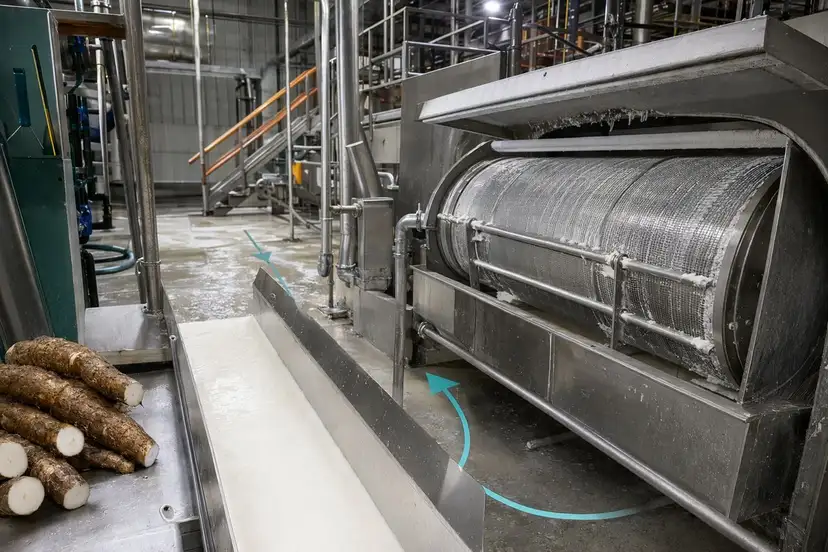
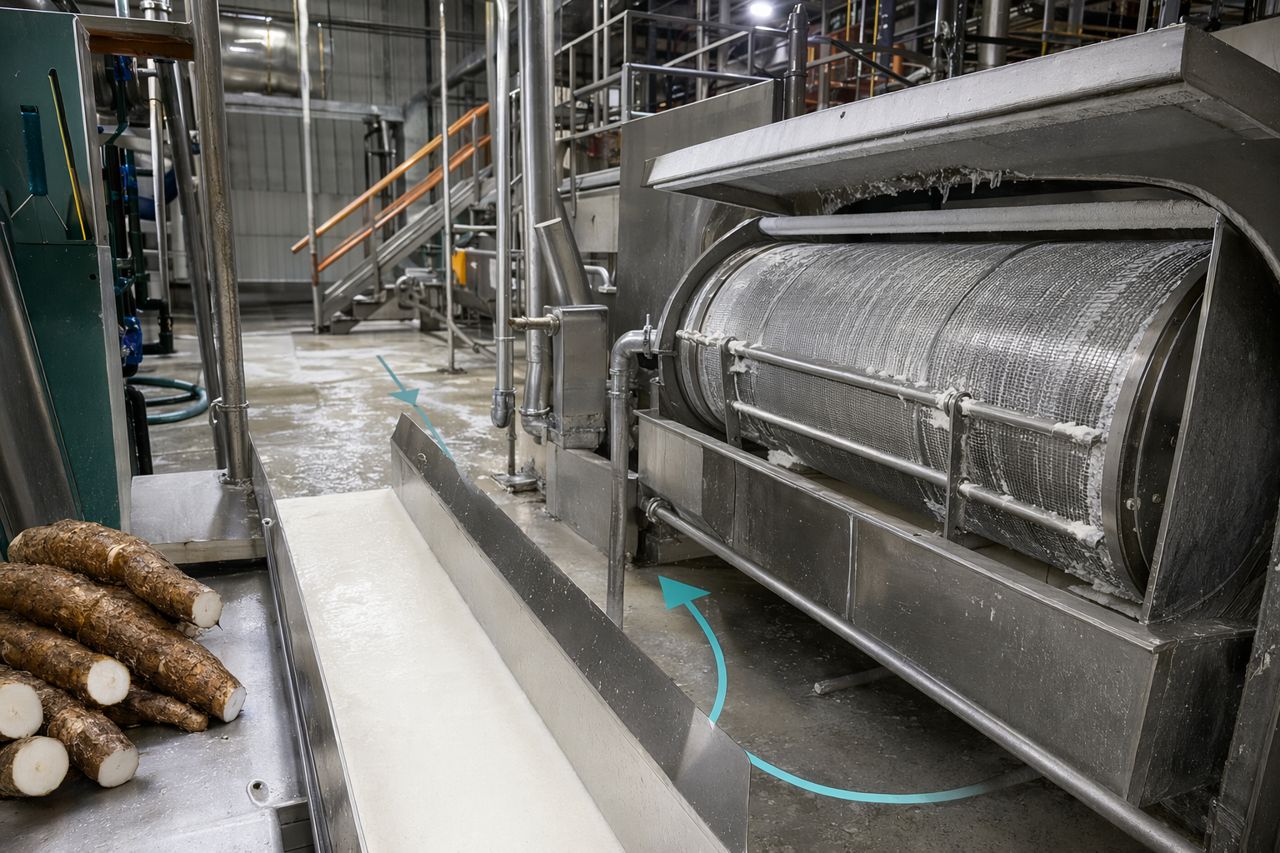
Screens do more than separate fiber. They create large wetted surface area, trap fine particles and receive warm slurry under constant loading. That makes them a microbial control point.
A practical screen sanitation review should ask:
- Are spray nozzles covering the full screen width?
- Are blind zones forming near side plates, support bars or feed edges?
- Does the screen drain fully during stoppages?
- Are fiber mats being removed before they ferment?
- Are operators increasing spray water to mask blinding?
- Is the screen area cleaned at the same discipline as tanks and pipes?
If screen sanitation is weak, the plant may use more water, lose separation sharpness, create more recycle load and increase downstream settling burden.
Settling systems need flow discipline
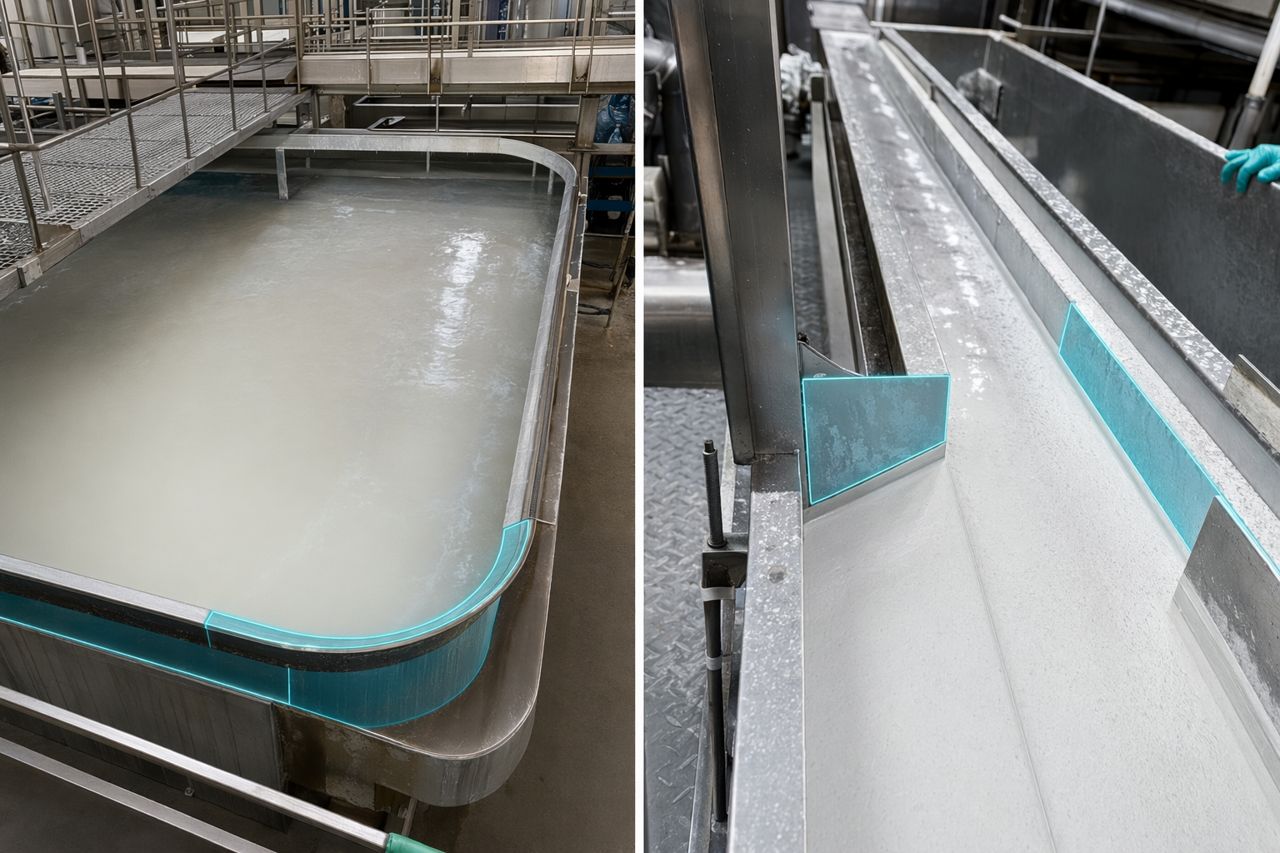
Settling tanks, starch milk channels and sedimentation zones are designed to slow flow. That is useful for separation, but risky for sanitation. Slow areas accumulate fines, soluble nutrients and microbial growth unless the plant has a strong clean-out routine.
High-performing plants usually control settling sanitation with:
- Predictable clean-out intervals tied to actual run length
- Sloped surfaces and drain paths that do not leave stagnant slurry
- Visual inspection of corners, weirs and underflow points
- Controlled start-up flushing after shutdowns
- Clear rules for what happens when production pauses
- Separation between root-soil areas and starch milk zones
The goal is not only to clean after contamination appears. The goal is to prevent the residence-time stack-up that creates contamination.
Enzyme programs work best in clean, stable slurry conditions
Enzymes are process tools, not sanitizers. In cassava starch processing, enzyme value depends on stable slurry contact, controlled addition, reliable mixing and predictable downstream separation. When microbial growth shifts pH, creates off-odors, changes viscosity or adds biofilm load, dose discipline becomes harder.
That is why ManiFlow Catalytics treats sanitation awareness as part of enzyme program design. We look at the real process context around the enzyme addition point:
- Where slurry temperature and residence time vary
- Whether mixing is strong enough to avoid local overfeed or underfeed
- Whether tanks are cleaned before the next production window
- Whether recycled process water is carrying contamination forward
- Whether operators have a clear response when the line stops
A supplier who only ships material can miss these details. A practical technical partner helps protect the conditions that make the enzyme program repeatable.
Build a sanitation map by process zone
A useful plant sanitation map does not need to be complicated. It should divide the wet end into zones and assign risk, cleaning action and verification responsibility.
Zone 1: root intake and washing
This is the soil-load zone. Keep it physically and operationally separate from starch milk areas. Manage mud, peel, stones and drainage so they do not create cross-contamination pressure.
Zone 2: rasping and primary slurry
This is the high-nutrient zone. Slurry is fresh, warm and exposed. Reduce unnecessary hold time, flush transfer paths and avoid leaving slurry in tanks during production pauses.
Zone 3: screening and fiber removal
This is the high-surface-area zone. Inspect spray coverage, side seals, fiber discharge points and under-screen accumulation. Do not let screen cleaning become only a mechanical maintenance task.
Zone 4: hydrocyclones and refining
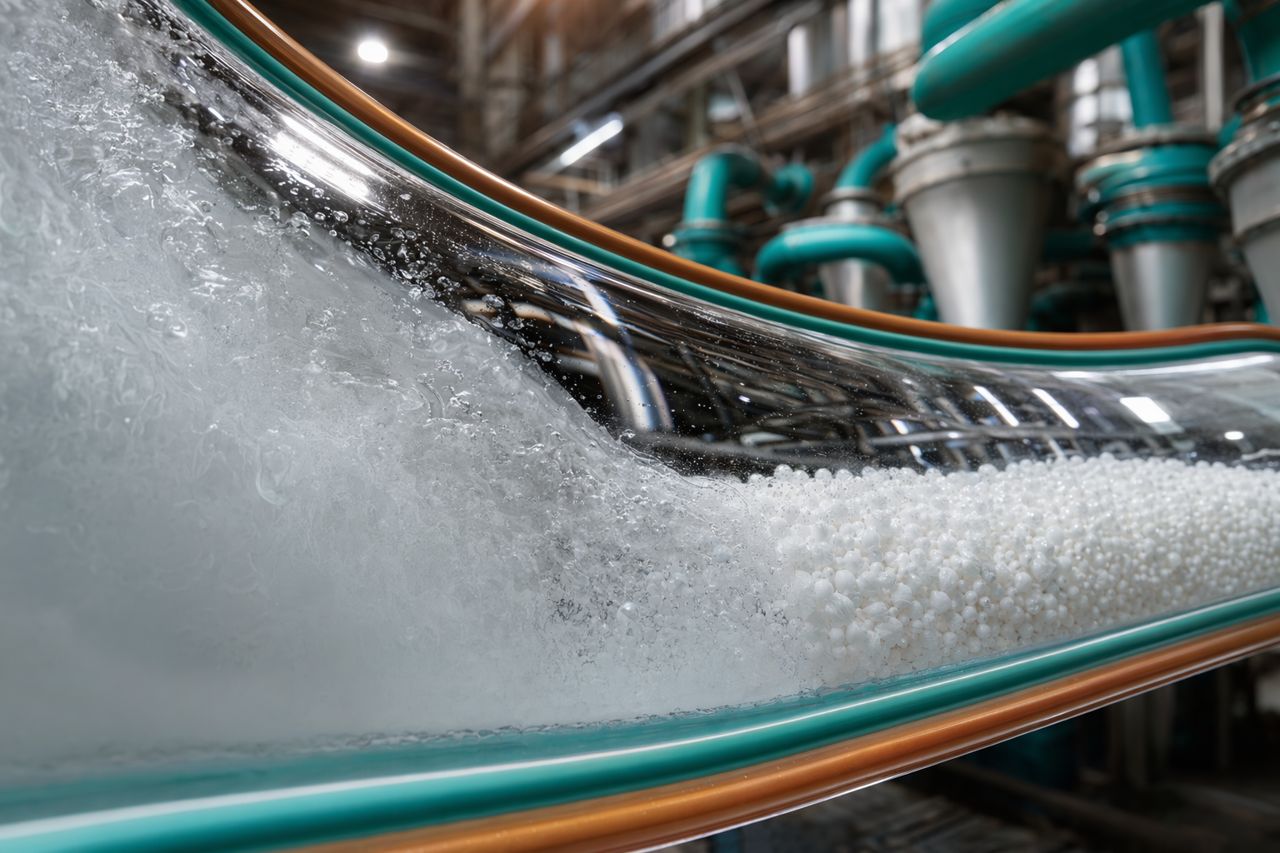
This is the high-recycle zone. Any contamination in feed tanks or process water can keep circulating. Monitor pressure stability, tank hygiene and the condition of low-flow lines.
Zone 5: settling, starch milk and dewatering
This is the slow-flow zone. Control deposits, corners, weirs and drain-down. A small stagnant volume can affect a large amount of product when production restarts.
Procurement risk: sanitation compatibility matters
For B2B buyers, supplier choice is not only about price per kilogram. It is about process risk. Enzyme products must fit the plant’s cleaning schedule, process water reality, storage conditions and operator routines.
Before approving a supplier, ask:
- Can the supplier explain where the enzyme should be added and why?
- Can they work around your sanitation windows and shutdown pattern?
- Do they understand cassava slurry variability by root freshness and season?
- Can they support dose discipline without pushing unnecessary overuse?
- Can they coordinate with your existing cleaning and microbial-control program?
- Can they provide consistent supply so the plant avoids unplanned substitutions?
This is where ManiFlow Catalytics is built to be useful: technical enough for plant-floor conversations, practical enough for procurement, and focused on repeatable operation.
A practical weekly sanitation review
Use a short cross-functional review between production, QA, maintenance and procurement. Keep it grounded in plant reality.
Review these points weekly:
- Where did slurry hold longer than planned?
- Which screens required abnormal attention?
- Did any tank or channel fail to drain fully?
- Were there odor, brightness or viscosity complaints?
- Did effluent load increase without a production explanation?
- Were enzyme additions made at the intended point and timing?
- Did any supplier change, substitute or delayed delivery affect the run?
Small sanitation gaps compound quickly in cassava starch processing. A weekly review prevents the same weak point from becoming a normal operating loss.
Request a quote for a cassava starch enzyme program
If your plant is working through slurry instability, screen fouling, variable separation or sanitation-driven process drift, ManiFlow Catalytics can help review the enzyme side of the process with plant-floor practicality.
Request a quote through our on-site form and share your process stage, current challenge, production pattern and target outcome. We will respond with a fit-for-purpose recommendation for cassava starch processing.