Hydrocyclone Optimization in Tapioca Starch Production: Practical Checks Before Blaming the Feedstock
When a tapioca starch line starts losing brightness, carrying more fiber, or sending too much starch to wastewater, the feedstock often gets blamed first.
Sometimes that is correct. Root age, variety, soil load, and harvest handling all matter. But in many cassava starch factories, the hydrocyclone station is the first place where small mechanical and slurry-control issues become visible at plant scale.
Before changing root contracts or increasing chemical clean-up, run the practical checks below. They help plant teams separate true raw-material variability from avoidable losses inside the washing, concentration, and refining stages.
ManiFlow Catalytics works with processors that need enzyme support without losing dose discipline or uptime. As an enzyme supplier for cassava starch processing, we look at the whole wet-end condition: rasping behavior, pulp release, slurry viscosity, separation load, and downstream water impact.
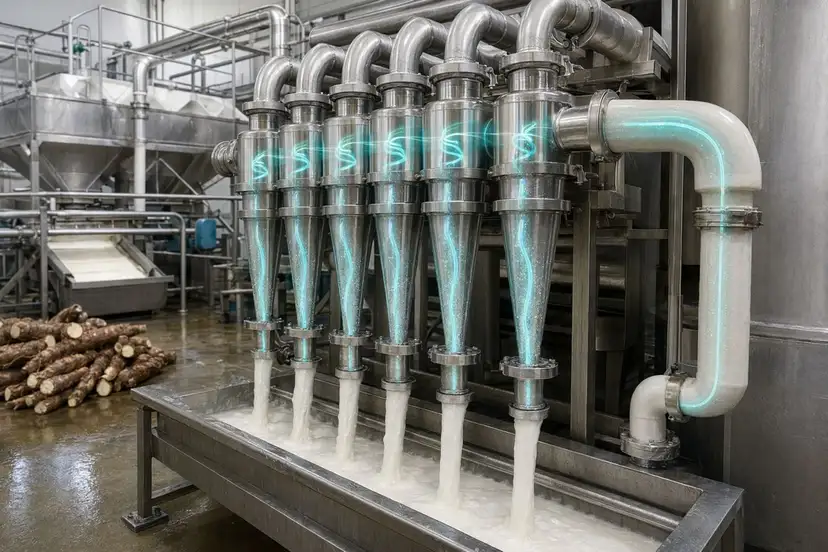
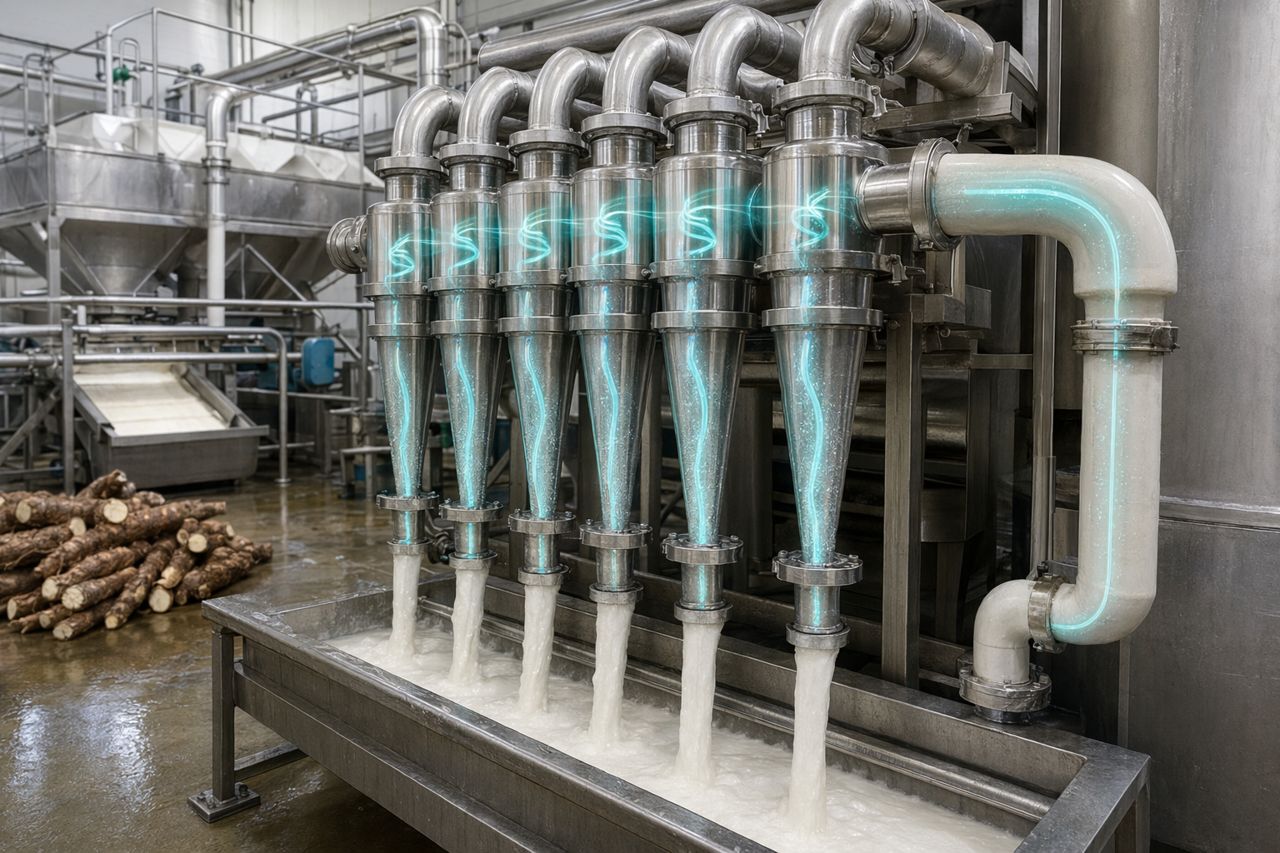
Why hydrocyclones drift out of control
Hydrocyclones depend on repeatable slurry behavior. If density, viscosity, pressure, or particle loading shifts, separation performance changes fast.
Common symptoms include:
- starch milk that looks gray or dull after refining
- rising fiber carryover into the starch fraction
- unstable overflow and underflow balance
- higher recycle load across cyclone banks
- more starch loss in tailings and wastewater
- operators opening water to compensate for thick slurry
- frequent nozzle cleaning or unplanned line stops
These are not always feedstock problems. They are often control-window problems.
Check 1: slurry consistency before the cyclone bank
The cyclone station cannot correct a slurry that arrives in the wrong condition.
Before blaming the hydrocyclones, inspect the wet-end steps ahead of them:
- rasping uniformity and root preparation
- screen condition and fiber removal efficiency
- pulp dilution consistency
- starch granule release from cell material
- presence of fine fiber, peel fragments, and gummy material
- tank agitation and dead zones before pumping
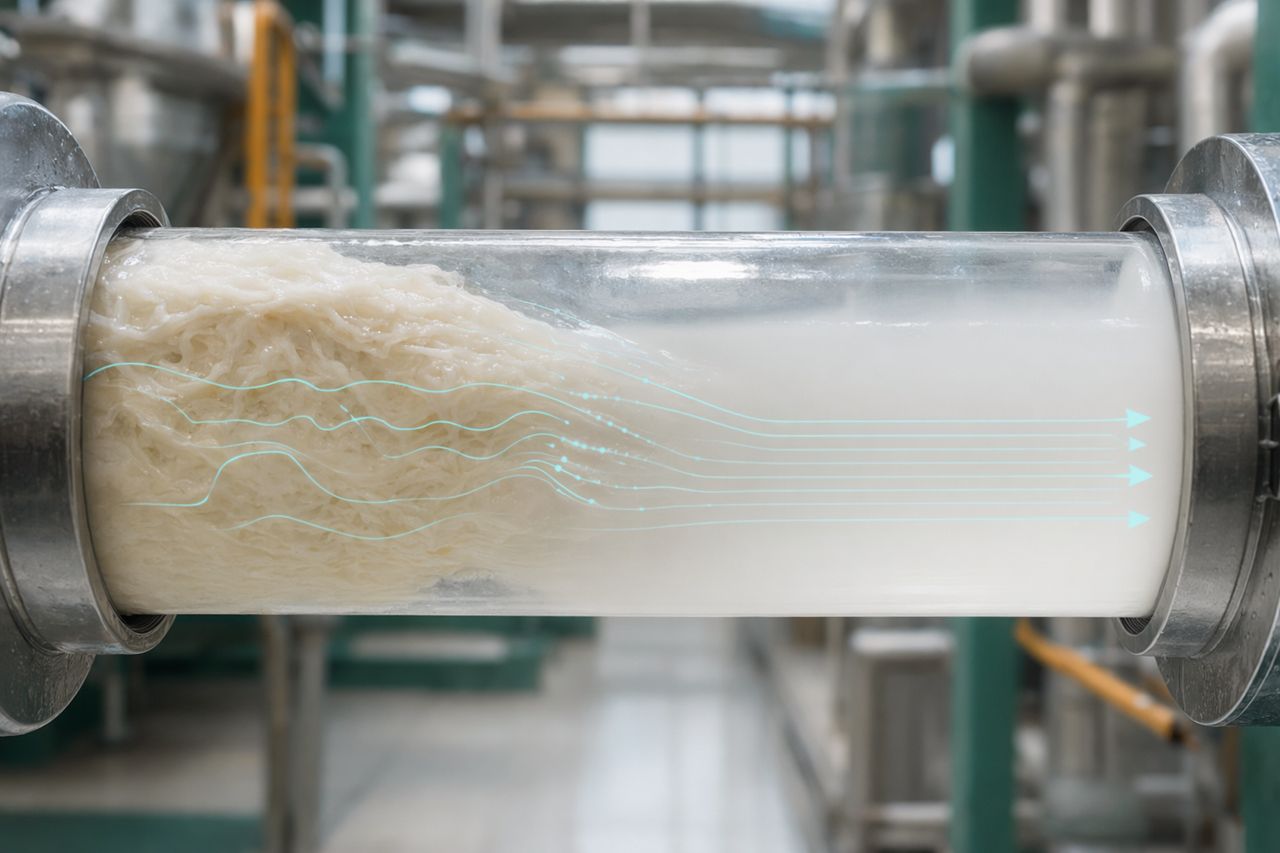
If slurry arrives with inconsistent solids behavior, the cyclone bank will separate one minute and overload the next. Operators may respond by adding more dilution water, but that can create a larger hydraulic burden and push starch losses further downstream.
Where enzyme support fits
Targeted enzyme use can help reduce viscous drag from non-starch plant material and improve slurry handling before separation. The value is not magic yield; it is a more predictable feed condition that allows the hydrocyclones to operate closer to their intended window.
For procurement teams, this means the enzyme decision should be tied to measurable plant outcomes: cleaner flow, fewer compensating adjustments, better brightness protection, and less starch leaving with waste streams.
Check 2: pressure stability across the operating window
Hydrocyclones are sensitive to pressure fluctuation. A gauge that looks acceptable at one moment may hide pulsing caused by pump condition, air ingress, feed tank instability, or partial blockage.
Review:
- pump wear and impeller condition
- suction restrictions or air leaks
- feed tank level swings
- valve positions that operators frequently adjust
- pressure drop consistency across the bank
- whether individual cyclones show different discharge patterns
A stable cyclone station sounds and behaves differently. Discharge patterns become more consistent. Operators stop chasing the line. The starch milk looks more uniform between checks.
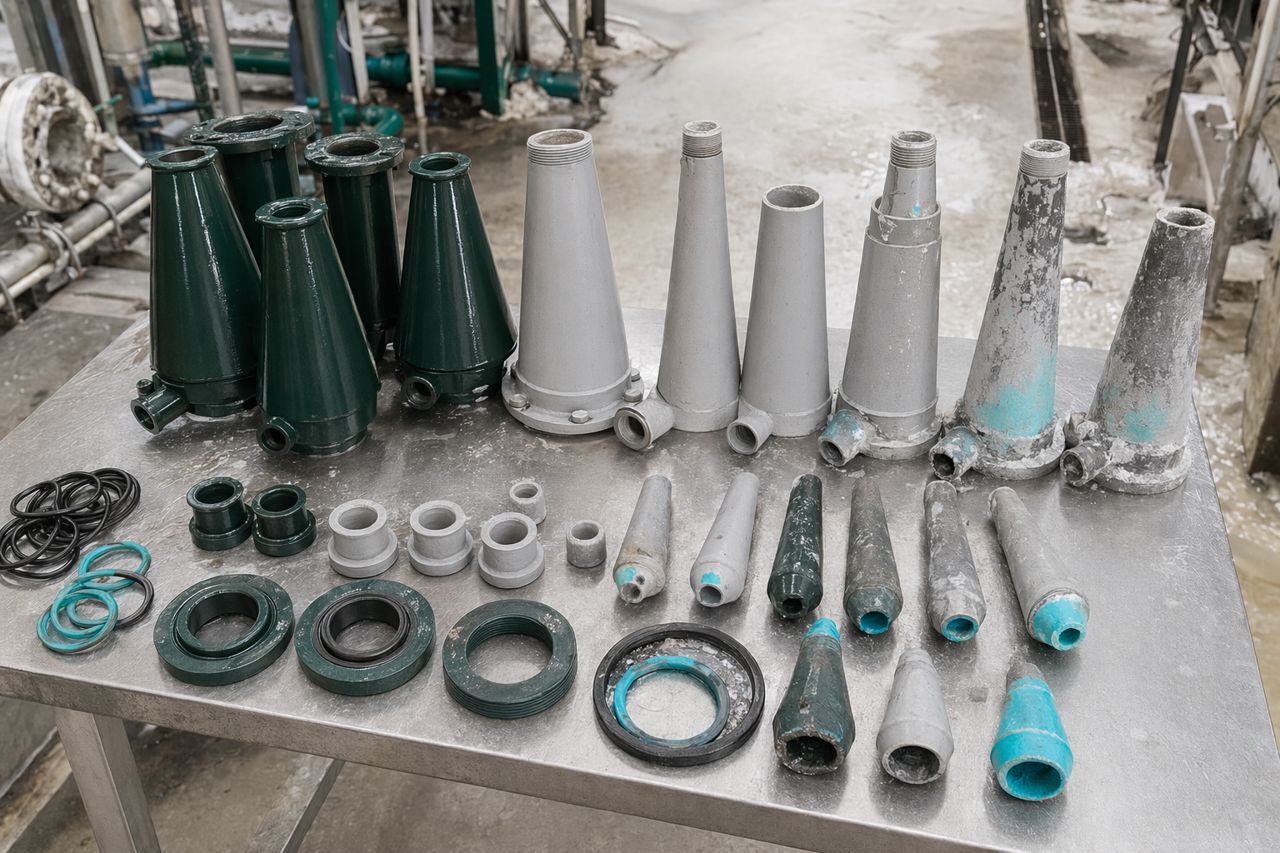
Check 3: nozzle wear, blockage, and mismatched parts
A worn or mismatched nozzle can turn a good cyclone layout into a poor separator.
Look for:
- enlarged apex openings from abrasive wear
- partial plugging from peel, fiber, or sand
- mixed nozzle sizes after maintenance swaps
- damaged vortex finders
- irregular spray or rope discharge
- cyclone bodies installed out of sequence
Maintenance teams often solve urgent stoppages with available parts. That keeps production moving, but over time it can create a mixed cyclone bank where each unit behaves differently. Standardization is a low-cost improvement that protects separation quality.
Check 4: stage balance, not just individual cyclone performance
A cassava starch factory rarely has a single cyclone problem. More often, the issue is stage balance.
Ask these questions:
- Is the first refining stage overloaded with fiber and fine pulp?
- Is wash water distributed evenly across stages?
- Are recycle streams returning too much suspended material?
- Is one bank compensating for poor performance upstream?
- Are operators using water addition as the main control lever?
The goal is not to maximize one stage in isolation. The goal is to keep starch moving toward higher purity while pushing fiber, solubles, and process water in the correct direction.
Check 5: brightness loss may start before separation
Starch brightness is often discussed at the refining and drying stages, but the risk starts much earlier.
Brightness can be affected by:
- poor root washing and soil carryover
- peel fragments in the slurry
- long holding times before extraction
- overloaded screens
- oxidized or degraded plant material
- excessive recycle of dirty process water
- unstable separation that allows impurities to follow the starch fraction
If brightness is drifting, check the front end and water loops before assuming the dryer or raw roots are the only causes.
Check 6: wastewater load is a separation signal
Rising wastewater load is not only an environmental issue. It is a process efficiency signal.
When hydrocyclones and upstream slurry conditioning are not working together, more starch, fines, and solubles leave the intended product path. This increases treatment burden and can reduce recoverable starch.
Practical signs include:
- higher visible starch in overflow or tailings
- heavier sediment in drains and sumps
- more frequent wastewater upset
- operators increasing flush water to keep the line moving
- inconsistent concentration before dewatering
An enzyme program should be evaluated against these plant-level effects, not as a standalone additive. The best result is a line that needs fewer corrective actions while keeping product quality on target.
Practical troubleshooting sequence for plant teams
Use this order before changing raw material specifications:
- Observe slurry behavior before the cyclone bank. Look for thickening, foaming, uneven solids, fiber load, and settling behavior.
- Confirm stable feed pressure. Watch for pulsing, air ingress, tank-level swings, or pump-related instability.
- Inspect cyclone hardware. Check nozzles, vortex finders, seals, body wear, and whether parts are standardized.
- Map stage balance. Review where wash water enters, where recycle streams return, and which stage is overloaded.
- Track starch loss points. Compare product stream, tailings, and wastewater observations over the same production window.
- Review enzyme fit. If slurry viscosity, fiber behavior, or release consistency is limiting separation, evaluate a controlled enzyme program.
- Lock the operating discipline. Avoid constant dose, water, or valve changes without a clear reason and recorded outcome.
What ManiFlow Catalytics brings to the conversation
Cassava starch production is not a laboratory brochure. It is a moving factory with root variability, pump wear, operator decisions, maintenance pressure, and procurement constraints.
ManiFlow Catalytics supports B2B teams that need practical enzyme solutions for wet-end control, not vague promises. We help processors think through:
- where enzyme addition makes sense in the line
- how to protect hydrocyclone stability
- how to reduce unnecessary dilution and rework
- how to support starch brightness and separation discipline
- how to evaluate supplier reliability before plant-scale adoption
- how to align production, quality, and purchasing teams around measurable value
The right enzyme supplier for cassava starch processing should understand both chemistry and the plant floor. If the hydrocyclones are struggling, the answer may be mechanical, operational, enzymatic, or a combination of all three.
Request a quote
If your cassava starch line is seeing unstable hydrocyclone performance, excess recycle, brightness drift, or rising wastewater load, send us your process context through the on-site request a quote form.
Tell us what is changing in the slurry, where the losses appear, and what your production team has already checked. ManiFlow Catalytics will respond with a practical enzyme-supply discussion focused on fit, reliability, and plant outcomes.