Cassava Fiber Pressing and Drying: How Wet Pulp Becomes a Margin Problem
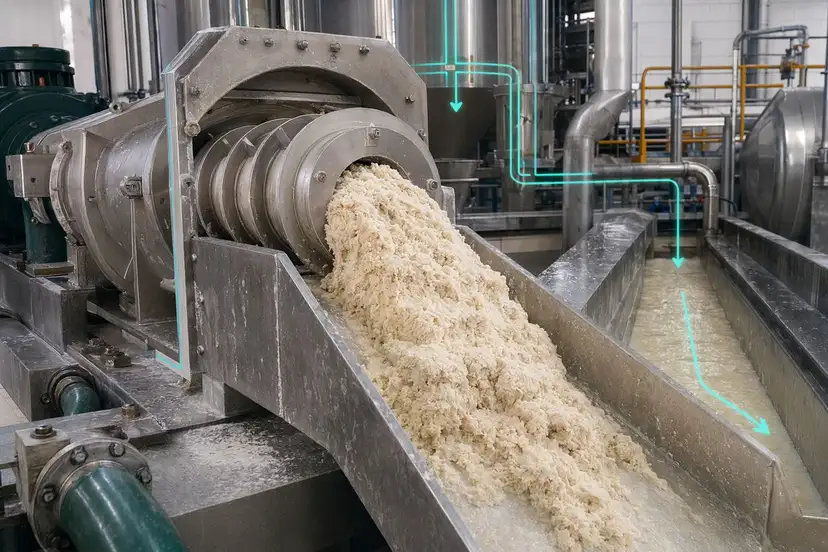
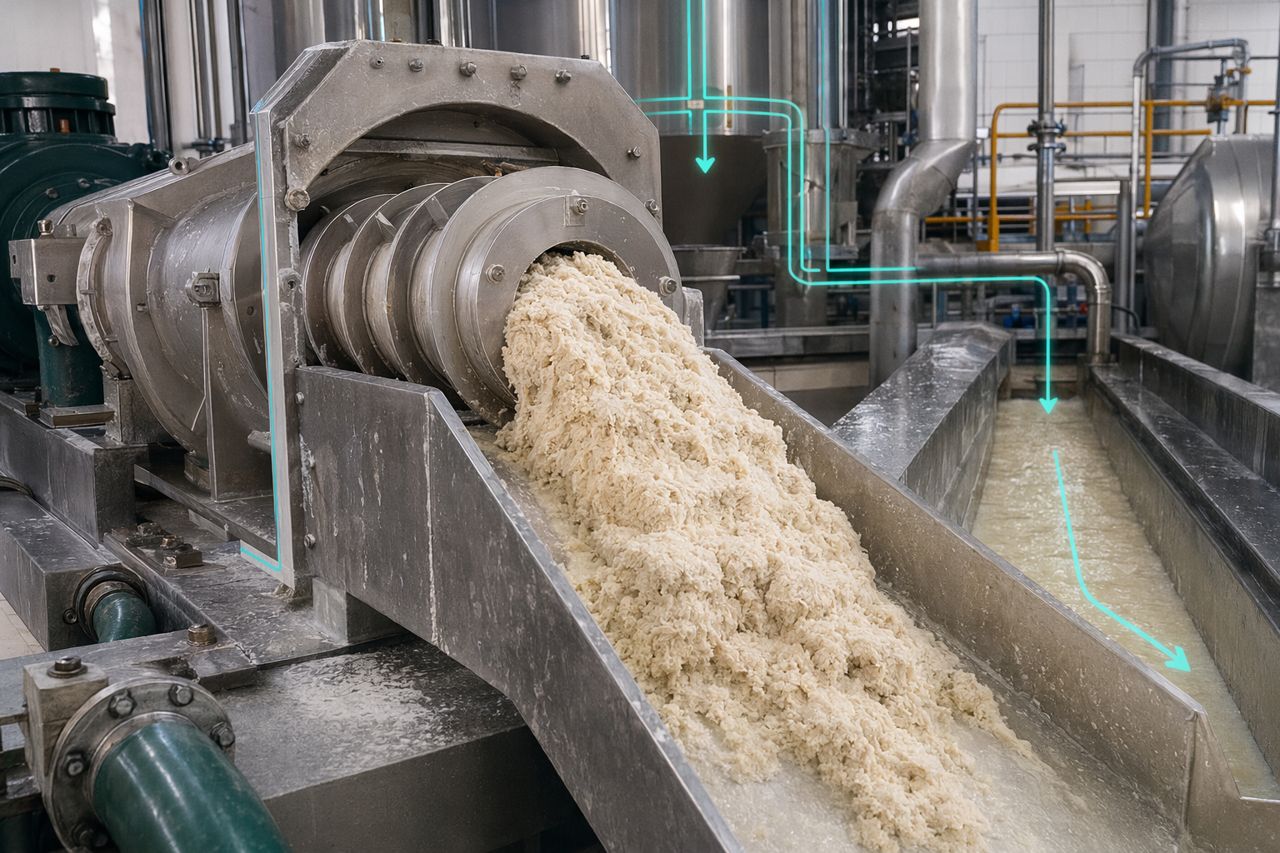
In a cassava starch factory, wet fiber often sits at the back of the conversation. The line is judged by starch recovery, whiteness, separator performance, and dryer stability. But pulp moisture has a direct cost: heavier handling, higher thermal load, slower drying, more odor pressure, and more starch value leaving with the residue.
That is why a serious enzyme supplier for cassava starch processing should understand more than conversion chemistry. The supplier needs to understand slurry behavior, rasping variability, screens, hydrocyclones, pulp presses, and what happens when yesterday’s roots do not behave like today’s roots.
ManiFlow Catalytics helps cassava starch plants look at fiber pressing as a process-control issue, not just a mechanical problem.
Wet pulp is not just water
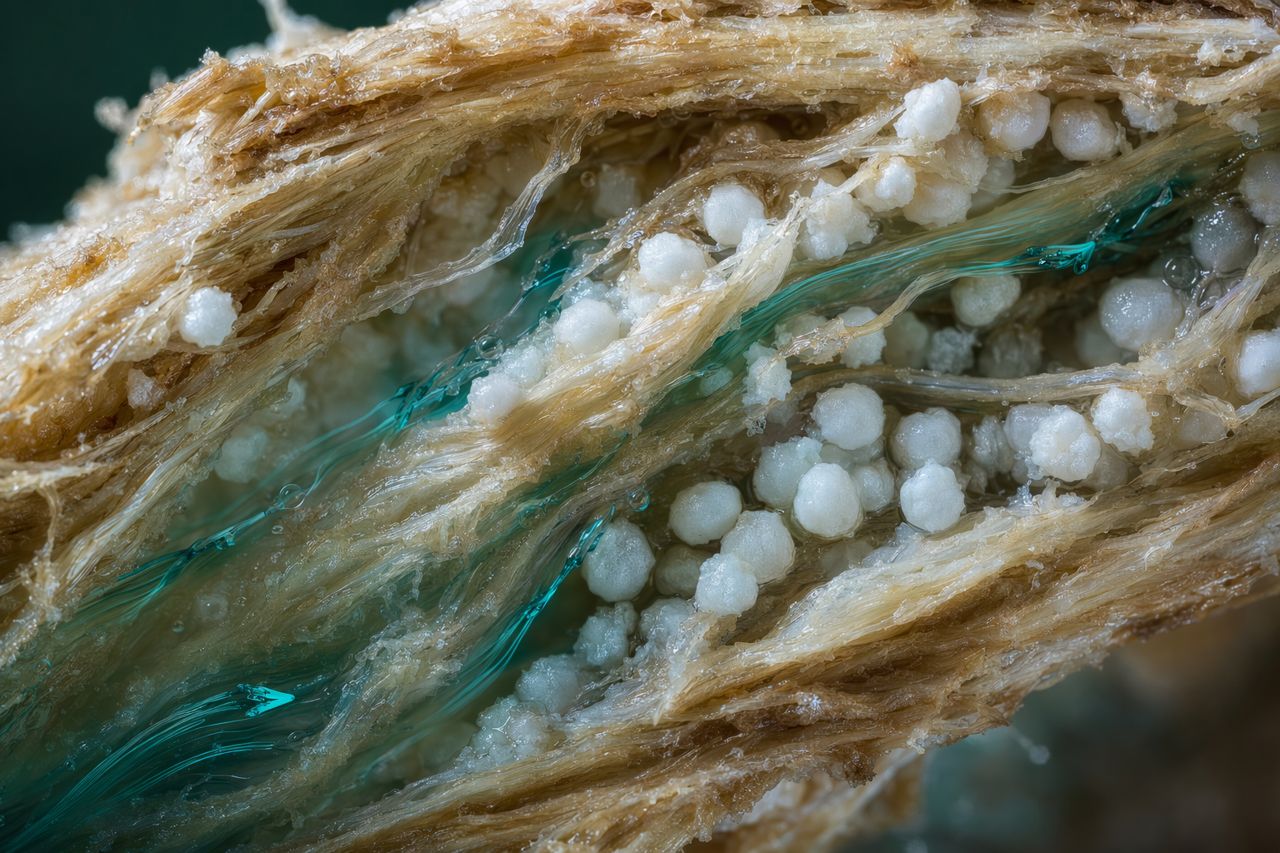
When pulp leaves extraction, the moisture it carries is not all free water. Some of it drains easily. Some of it is held inside disrupted root tissue, fibrous cell-wall structure, and fine solids that create a dense, sticky mat.
That distinction matters.
Free water can often be handled with better drainage, screen condition, and press loading. Bound water and trapped starch require better upstream release, controlled viscosity, and more stable separation behavior before the pulp reaches the press.
If the factory only looks at the press discharge, the real cause may already be upstream.
The margin leak shows up in five places
1. Dryer energy and throughput
Wet pulp increases dryer burden. More moisture means more heat demand, longer residence pressure, and less flexibility when the line is already running close to capacity. In plants selling dried fiber or using it as feedstock, this becomes a direct margin issue.
2. Starch loss in residue
Fiber that still carries recoverable starch is not only a by-product problem. It is yield leaving the factory. When pulp feels heavy, slippery, or pasty, it can indicate incomplete release, excessive fines retention, or poor wash efficiency.
3. Press instability
A pulp press performs best when feed consistency is predictable. Surges in fiber load, root quality, or slurry viscosity can create inconsistent cake formation. Operators compensate with pressure, speed, dilution, or recirculation, but those adjustments often move the problem elsewhere.
4. Odor and storage risk
High-moisture pulp turns faster. It is harder to store, harder to truck, and more likely to create odor complaints around the plant. Even when the starch line is running well, pulp logistics can become the bottleneck.
5. Wastewater load
Poor separation and over-dilution increase liquid handling. More suspended solids and soluble organics in the water loop can raise treatment pressure and make daily plant balance less predictable.
Why pulp pressing problems often start upstream
Fiber pressing is the last visible stage, but it is shaped by earlier decisions:
- Root freshness and variety
- Rasper condition and particle profile
- Extraction water ratio
- Screen integrity and cleaning discipline
- Retention time before separation
- pH and temperature drift
- Hydrocyclone balance
- Recycle stream solids
- Operator response to viscosity changes
When these inputs move, pulp behavior moves with them. A good intervention should reduce variability, not add another uncontrolled variable.
Where enzymes can help
In cassava starch processing, enzyme programs can be used to support starch release, manage slurry behavior, and reduce the amount of recoverable value trapped in the pulp stream. The practical goal is not to make the line complicated. It is to make the existing extraction and separation equipment easier to control.
Depending on the plant configuration, an enzyme-supported program may help with:
- Loosening plant tissue structure before or during extraction
- Supporting cleaner starch release from fibrous material
- Reducing sticky, pasty slurry behavior that affects screening
- Improving consistency into washing and separation stages
- Supporting better dewatering behavior at the pulp press
- Reducing starch carryover into fiber residue
The best result comes from matching the enzyme strategy to the actual line. Dose discipline, contact time, temperature window, pH, and mixing quality all matter. Enzyme use should be practical enough for shift teams to run without constant troubleshooting.
What an enzyme cannot fix
A credible supplier should be clear about limits. Enzymes do not replace damaged screens, worn rasper blades, overloaded presses, poor water balance, or inconsistent cleaning.
If the press is being fed with unstable solids, enzymes may help reduce the problem, but the equipment still needs a stable operating window. If starch is being lost through a torn screen, chemistry is not the first answer. If operators are constantly changing dilution to chase flow, the process needs a control plan.
At ManiFlow Catalytics, we prefer plant-floor reality over lab promises. The question is not whether an enzyme works in isolation. The question is whether it works in your process, with your roots, your water, your shift practices, and your commercial targets.
Signs your fiber stream deserves attention
Your pulp pressing and drying zone may be costing more than it should if you see:
- Wet cake that remains heavy even after press adjustments
- Pulp that varies sharply between shifts or root lots
- High starch content suspected in fiber residue
- Frequent screen blinding or washing instability
- Dryer load limiting overall factory throughput
- Odor pressure from stored pulp
- Excessive liquid return from fiber handling
- Operators adding water to solve one problem and creating another
These are not isolated symptoms. They usually point to a wider balance issue across extraction, separation, and dewatering.
A practical review framework
Before recommending a supply plan, ManiFlow Catalytics looks at the process in operational terms:
Feed and root variability
Cassava roots change by harvest timing, storage time, variety, soil condition, and handling. Those changes affect fiber structure, starch release, and slurry behavior.
Mechanical release
Rasper performance sets the starting point. If the root tissue is not opened efficiently, the downstream process has to work harder to recover starch.
Washing and screening behavior
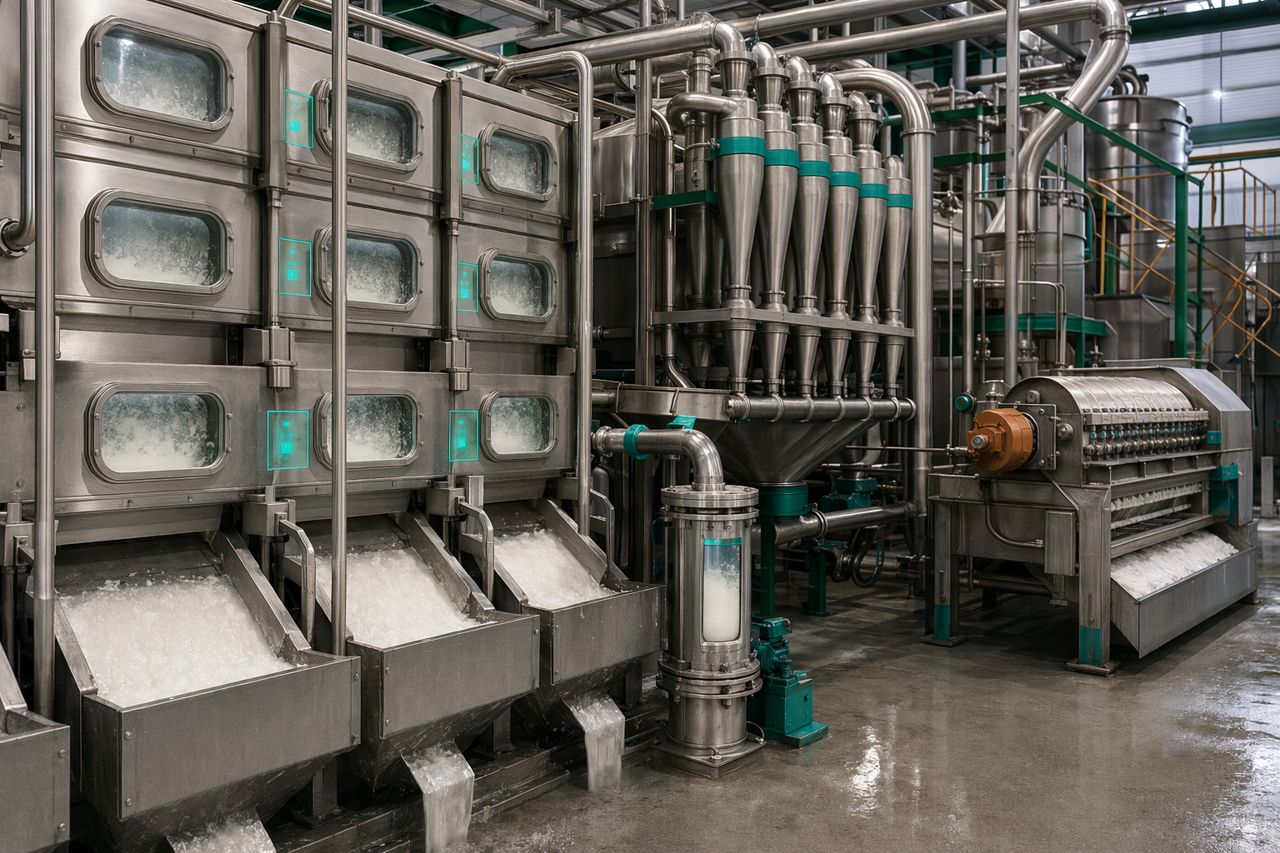
Screen loading, fiber mat formation, and wash water distribution determine how much starch remains trapped in pulp.
Slurry movement
Pipes, tanks, pumps, and recycle streams shape shear, residence time, and solids balance. Small changes here can shift press performance.
Dewatering and drying economics
The target is not only lower moisture. The target is lower total cost per tonne of useful output, with stable running conditions and fewer corrective actions.
How ManiFlow Catalytics supports cassava starch plants
As a technical enzyme supplier for cassava starch processing, ManiFlow Catalytics focuses on reliability, fit, and supply confidence. We help procurement and plant teams align around a program that can be tested, controlled, and scaled.
Our support can include:
- Process review for extraction, pulp handling, and separation points
- Selection of enzyme approach based on plant objectives
- Practical dosing guidance without unnecessary complexity
- Compatibility review for pH, temperature, and contact time
- Trial planning with measurable plant outcomes
- Supply planning for repeat purchasing and production continuity
- Documentation that helps production, QA, and procurement work from the same assumptions
The goal is not to sell a generic drum into a complex factory. The goal is to support a cleaner, steadier process that protects starch yield and reduces avoidable cost.
Turning wet pulp into a controlled cost
Wet pulp will always be part of cassava starch production. The question is whether it is a managed by-product or a quiet margin drain.
When fiber pressing is treated as a full-line issue, plants can make better decisions about water balance, release efficiency, separation, press loading, and drying demand. Enzymes can be part of that control strategy when they are selected and applied with discipline.
If your cassava fiber stream is carrying too much water, starch, or operating risk, ManiFlow Catalytics can help you review the process and define a practical next step.
Request a quote
Tell us what you are trying to improve: pulp moisture, starch loss, press stability, dryer load, wastewater pressure, or supply reliability. We will respond with a practical recommendation for your cassava starch line.
Request a quote using the on-site form