Rasper Blade Wear: The Hidden Mechanical Loss Point in Cassava Starch Plants
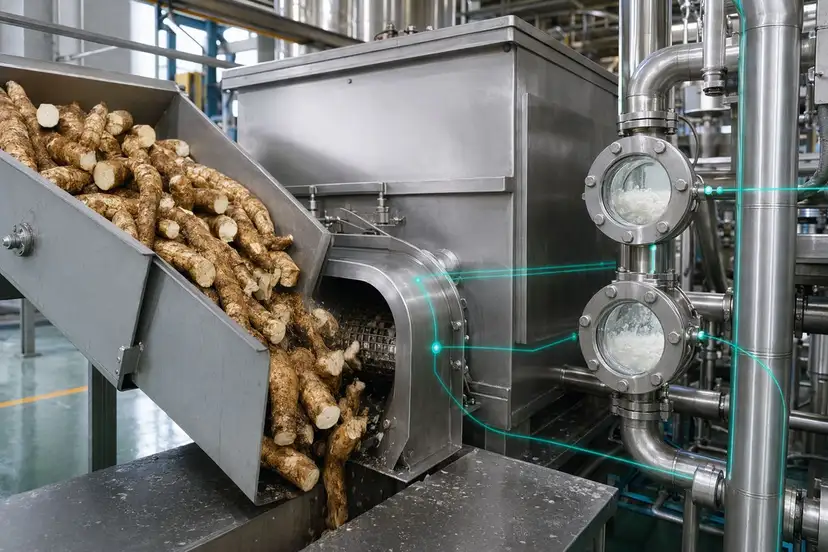
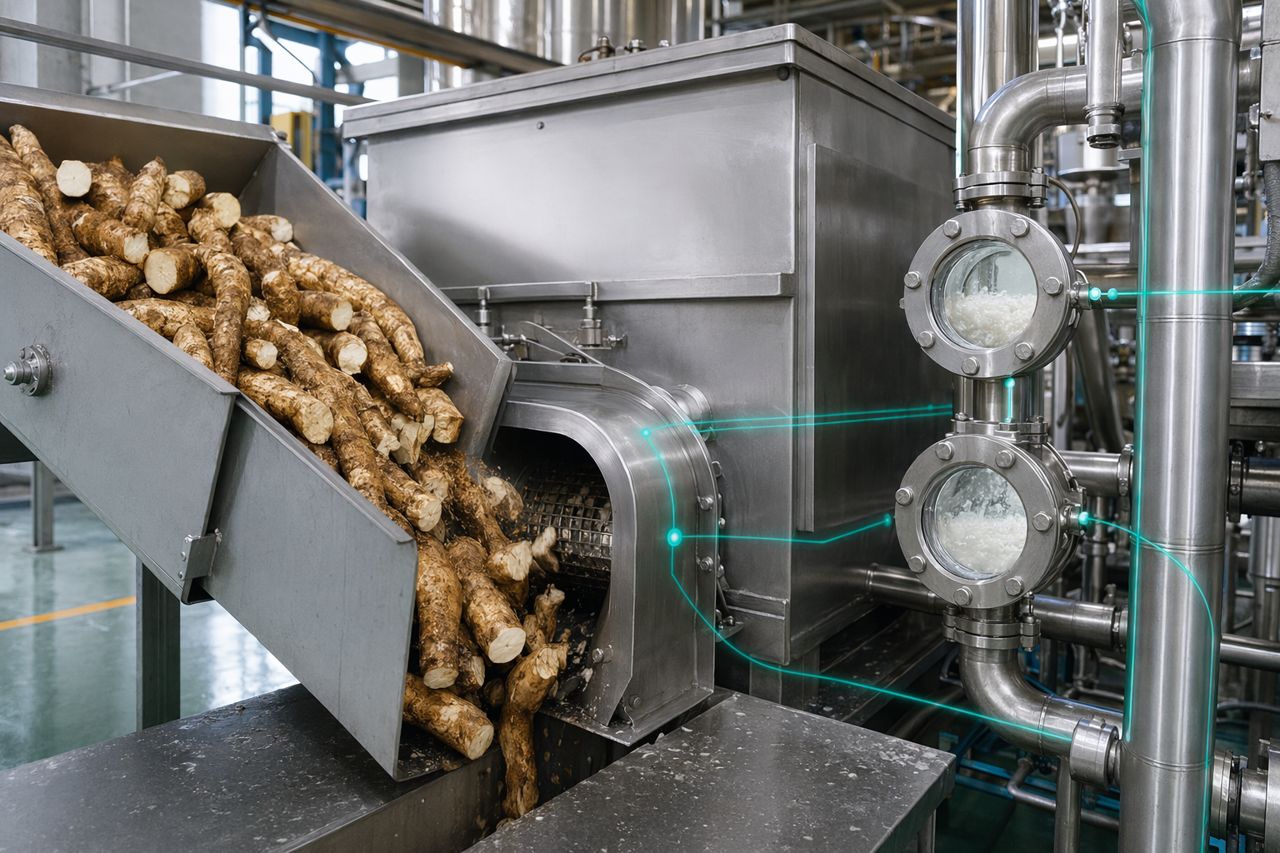
In a cassava starch factory, the rasper is not just a size-reduction machine. It is the first major yield gate.
When blades are sharp, cassava cells rupture cleanly and starch is released into the slurry early enough for screening, washing, and hydrocyclone separation to do their jobs. When blades wear, the line can still look busy, but more starch remains locked in fiber. The loss is mechanical, gradual, and easy to normalize until the numbers become expensive.
For plant managers, the challenge is not only blade replacement timing. It is understanding how blade wear changes slurry behavior across the whole process.
Why worn rasper blades cost more than maintenance budget
A worn rasper usually does not create one obvious failure. It creates drift.
Typical symptoms include:
- Lower starch extraction from the same root intake
- More residual starch in pulp and fiber cake
- Heavier load on screens and fiber separation
- Slurry that feels less consistent shift to shift
- More recirculation pressure around recovery steps
- Higher water demand to chase the same separation result
- More solids and organic load moving toward wastewater treatment
The rasper may still run at target speed. The motor may still sound normal. Operators may still hit throughput. But the starch balance can move against the plant.
That is why blade wear belongs in the same discussion as yield, slurry control, and process chemistry.
The mechanical link: cell rupture before separation
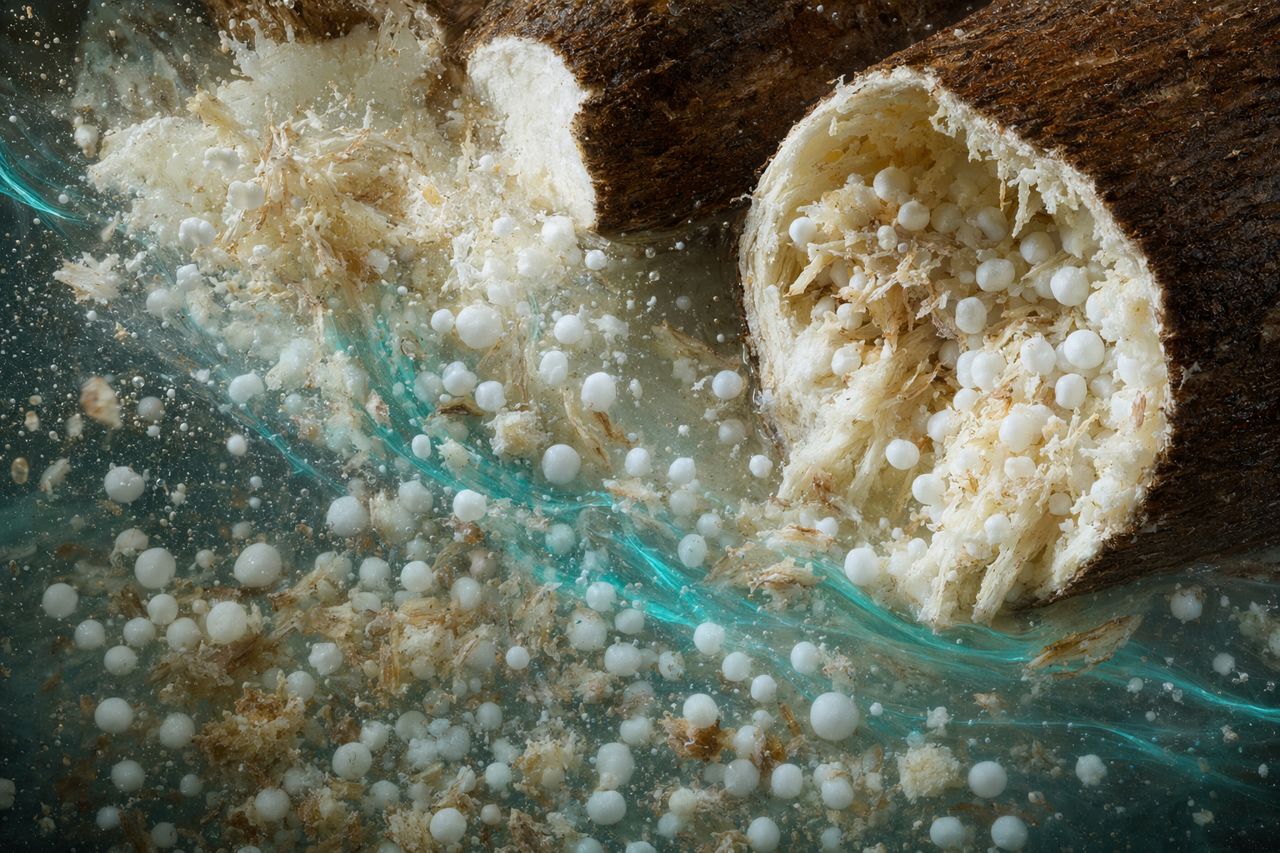
Cassava starch sits inside plant cells. The rasper’s job is to open those cells fast and consistently. The sharper the cutting action, the cleaner the release.
As blades round off, the machine shifts from cutting toward bruising and tearing. That changes the slurry in several ways:
-
Less complete starch liberation
More starch stays attached to fiber and exits through pulp streams.
-
More variable particle behavior
Fiber fragments, root tissue, and unreleased starch create a less predictable feed to downstream equipment.
-
Reduced separation efficiency
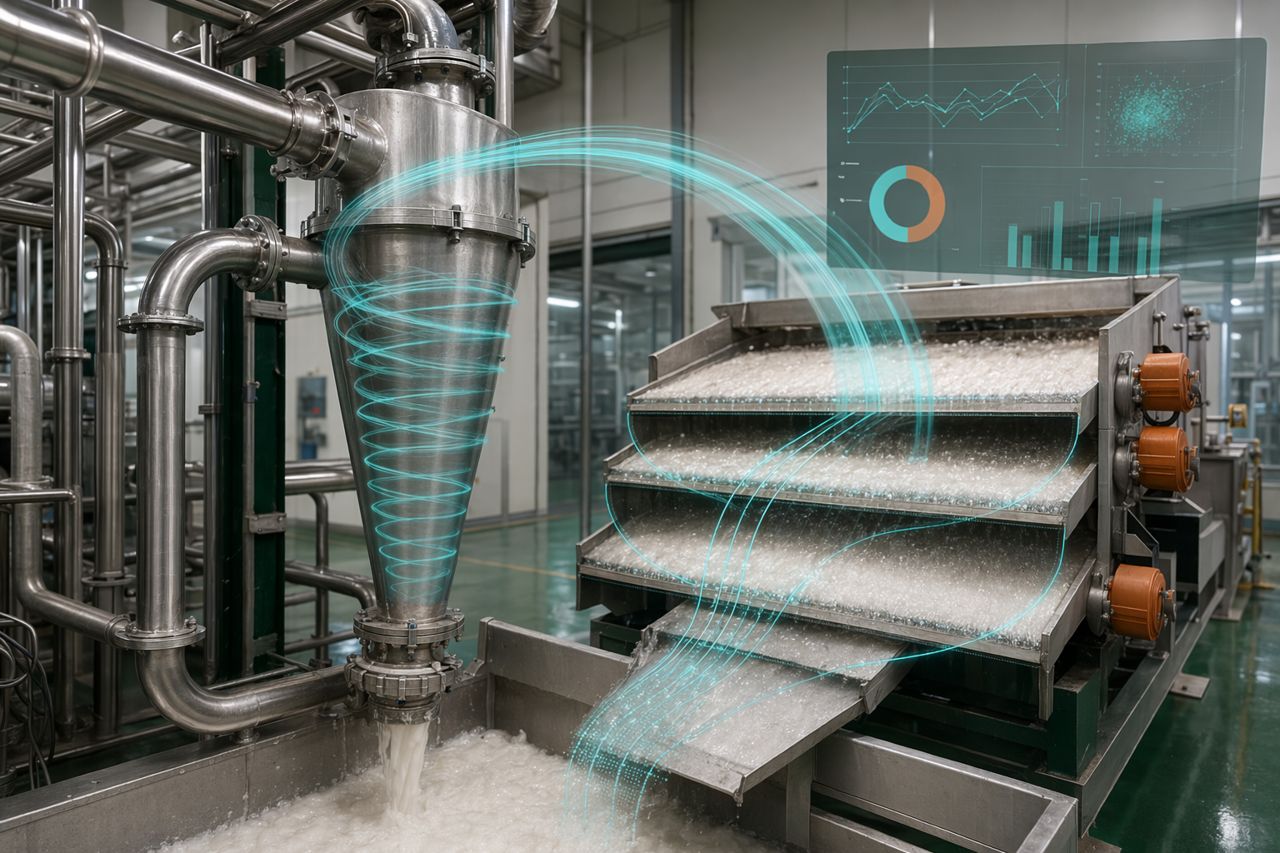
Hydrocyclones and screens perform best when incoming slurry is consistent. Worn rasping makes them work harder.
-
More process correction downstream
Plants may compensate with water, recirculation, adjustments, or operator intervention. Those actions carry cost.
Blade wear is not only a maintenance issue. It is a starch release issue.
Where enzymes fit — and where they do not
Enzyme solutions can support cassava starch processing by improving slurry flow, helping reduce viscosity pressure, supporting separation behavior, and reducing avoidable organic load when applied with discipline.
But enzymes are not a license to ignore worn steel.
A practical enzyme supplier for cassava starch processing should help the plant distinguish between:
- Mechanical release problems caused by rasper condition
- Slurry handling problems caused by viscosity, fiber behavior, or process variability
- Separation problems caused by feed inconsistency, dilution, or hydrocyclone balance
- Wastewater load problems caused by avoidable carryover and inefficient recovery
At ManiFlow Catalytics, we look at enzyme use as part of the line, not as a bolt-on additive. The best results come when mechanical discipline and biochemical support work together.
Signs your rasper may be creating hidden starch loss
Your plant may have a blade-wear loss point if you see any of the following patterns:
Residual starch in pulp increases before anyone blames the rasper
Fiber cake is one of the first places to check. If more starch is leaving with pulp while root quality and throughput are broadly stable, the rasper deserves attention.
Operators add more water to make the line behave
Extra water can make a difficult slurry look manageable, but it can dilute the process, increase load, and mask the original cause.
Hydrocyclone performance becomes harder to stabilize
If feed variability rises, separation equipment has to absorb that variation. Worn rasping can create exactly that kind of upstream instability.
Yield drifts gradually across blade life
The worst losses are often not dramatic. They arrive as a slow decline that becomes accepted as normal plant behavior.
Root variability exposes the weakness
Sandy roots, seasonal changes, different varieties, or inconsistent peel quality can accelerate blade wear and make an already marginal rasper condition more costly.
A practical inspection rhythm for plant teams
Every factory has its own maintenance plan, but the logic should be consistent: connect blade condition to process outcomes.
Useful checks include:
- Tracking blade life against extraction performance, not just operating hours
- Comparing pulp starch trends before and after blade changes
- Watching slurry consistency after the rasper during different root lots
- Reviewing water addition patterns by shift
- Checking screen load and hydrocyclone feed stability
- Recording sand load and root preparation conditions
- Aligning enzyme dosing discussions with actual mechanical condition
The point is not to add paperwork. The point is to stop invisible loss from becoming routine.
Dose discipline starts with process discipline
Enzyme programs work best when the plant knows what it is asking the enzyme to solve.
If the issue is worn blades, the first correction is mechanical. If the issue is viscosity, fiber behavior, or separation support, an enzyme program may help the line run with more control. If both are present, the plant needs a combined plan.
That is where ManiFlow Catalytics focuses its technical support:
- Clear process goals before recommendation
- Dose discipline based on operating reality
- Fit with existing slurry flow and equipment layout
- Practical guidance for procurement and stock planning
- Support that respects uptime and production pressure
Factories do not need vague promises. They need stable inputs, predictable handling, and a supplier that understands what happens when the line is moving.
Why procurement should care about blade wear
Rasper blade wear may look like a maintenance topic, but it affects procurement risk.
When mechanical release is unstable, plants often spend more to compensate elsewhere: water, energy, additives, downtime, rework, wastewater handling, or emergency purchasing. A better supplier conversation connects the full operating picture.
For enzyme procurement, that means asking:
- Will the supplier help identify whether the problem is mechanical or biochemical?
- Can the recommendation fit the plant’s actual process conditions?
- Is the product plan practical for storage, handling, and repeat ordering?
- Will the support team speak clearly with production, maintenance, and purchasing?
- Can the program reduce variability instead of adding another variable?
A reliable enzyme supplier for cassava starch processing should support decisions across production and procurement, not just provide a drum and a label.
The bottom line
Rasper blade wear is one of the easiest starch loss points to overlook because the plant keeps running. But running is not the same as recovering.
When blade edges decline, starch release declines with them. The downstream line then has to fight a problem created at the front end. Enzymes can support slurry behavior and separation control, but they perform best when the mechanical foundation is under control.
If your cassava starch plant is reviewing yield loss, viscosity control, hydrocyclone stability, or wastewater load, start at the rasper and follow the slurry forward.
Request a quote
Tell ManiFlow Catalytics about your cassava starch line, your current process challenge, and the outcome you want to improve. Use the on-site request a quote form and our team will respond with a practical supply and support conversation.