Enzyme for Tapioca Starch Recovery | ManiFlow
Improve tapioca starch recovery from cassava fiber and under-extracted mash with a practical enzyme program for viscosity control, screening efficiency, and separation stability.
Request pricing Improve tapioca starch recovery from cassava fiber and under-extracted mash with a practical enzyme program for viscosity control, screening efficiency, and separation stability.
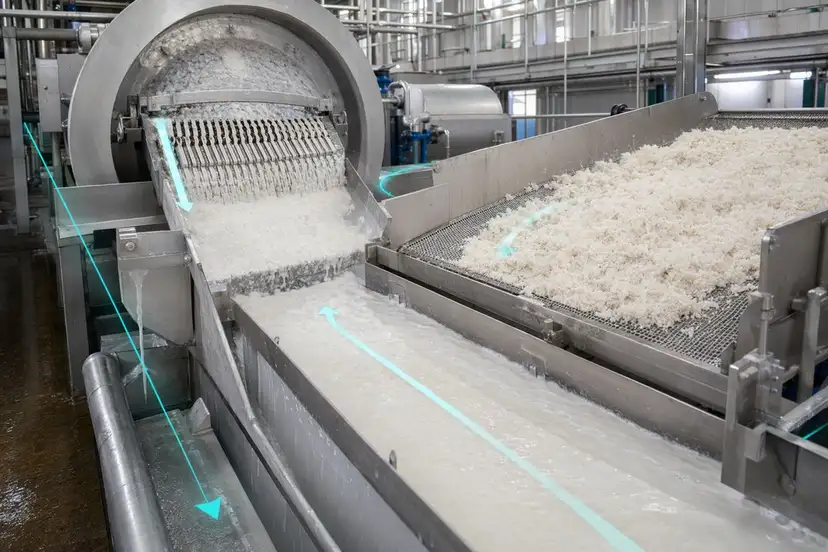
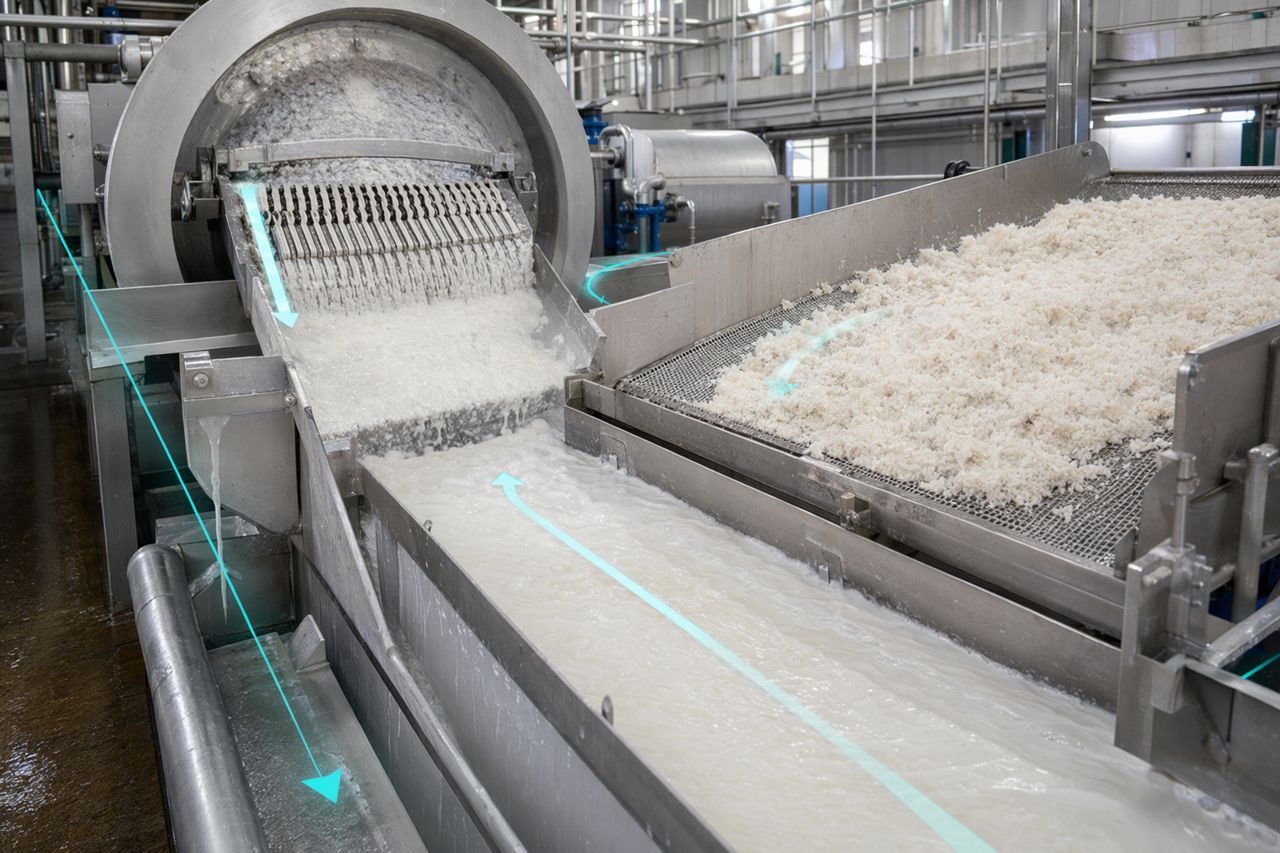
Request pricingCassava starch losses are usually not dramatic in one place. They accumulate in wet fiber, thick mash, slow screens, unstable hydrocyclones, and rework loops that the shift team has learned to tolerate.
ManiFlow Catalytics supplies enzyme solutions for tapioca starch recovery that help release starch locked in the cassava cell-wall matrix and improve slurry behavior before separation. The target is simple: recover more saleable starch from the same root intake while keeping the line controllable.
Even with good rasping and washing discipline, starch can stay trapped when the mash behaves poorly. Common plant-floor symptoms include:
When viscosity and fiber-bound starch rise together, the extraction section works harder but does not always recover more.
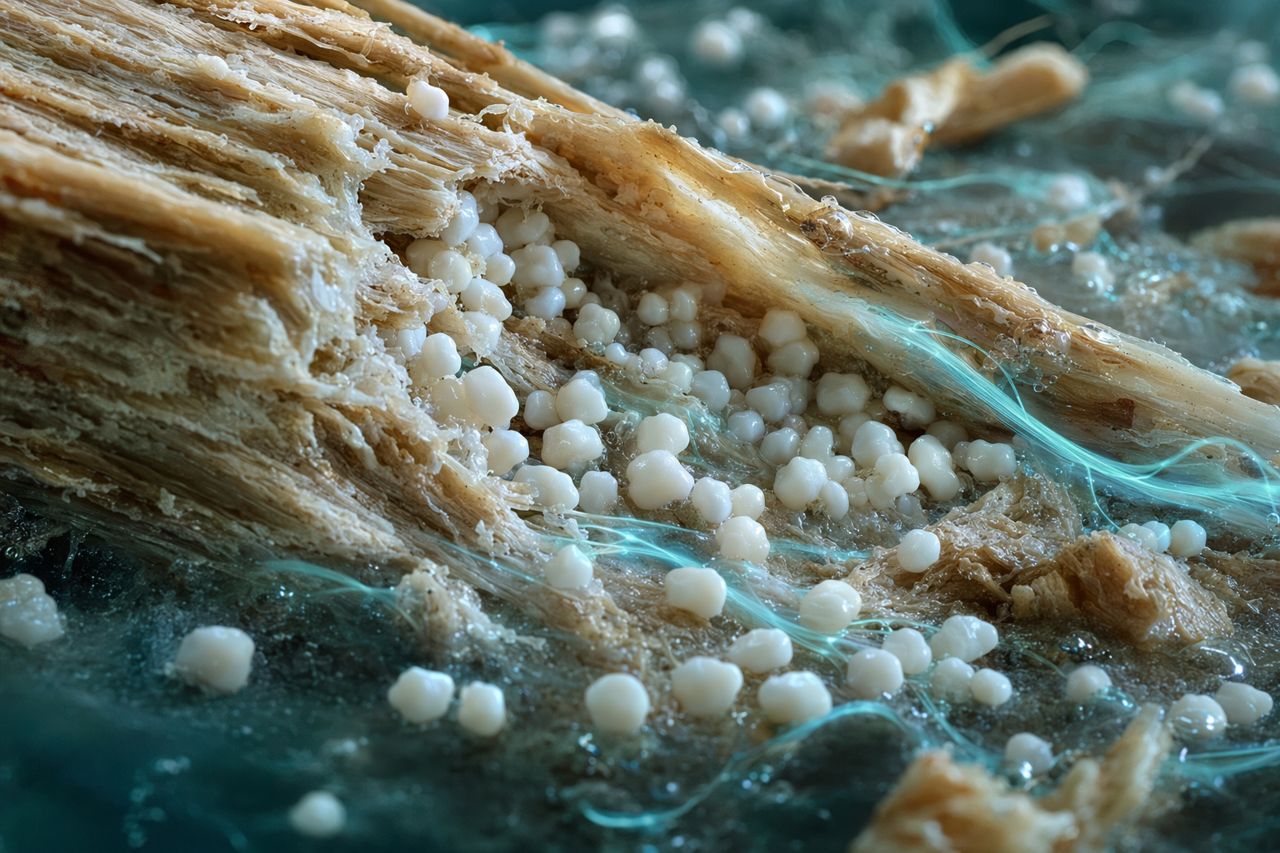
Our tapioca starch recovery enzyme program is designed for cassava mash conditions where starch granules are physically held inside disrupted but still resistant plant tissue.
The enzyme system targets the non-starch matrix around the granules, helping loosen the structure so washing, screening, and separation equipment can do its job with less resistance.
This is not about adding complexity. It is about making the extraction line behave more consistently.
An enzyme only creates value when it fits the plant. ManiFlow works with production, quality, and procurement teams to define a controlled dosing window based on your raw material, residence time, process temperature, pH range, and recovery objectives.
We help you evaluate:
As an enzyme supplier for cassava starch processing, ManiFlow focuses on plant economics, not lab curiosity.
This solution is a strong fit for cassava starch factories dealing with:
When rasping energy is high but wet fiber still carries visible starch, enzymatic loosening can support better release during washing and screening.
When slurry viscosity or fibrous structure limits screen performance, the right enzyme program can help improve flow and reduce bottleneck behavior.
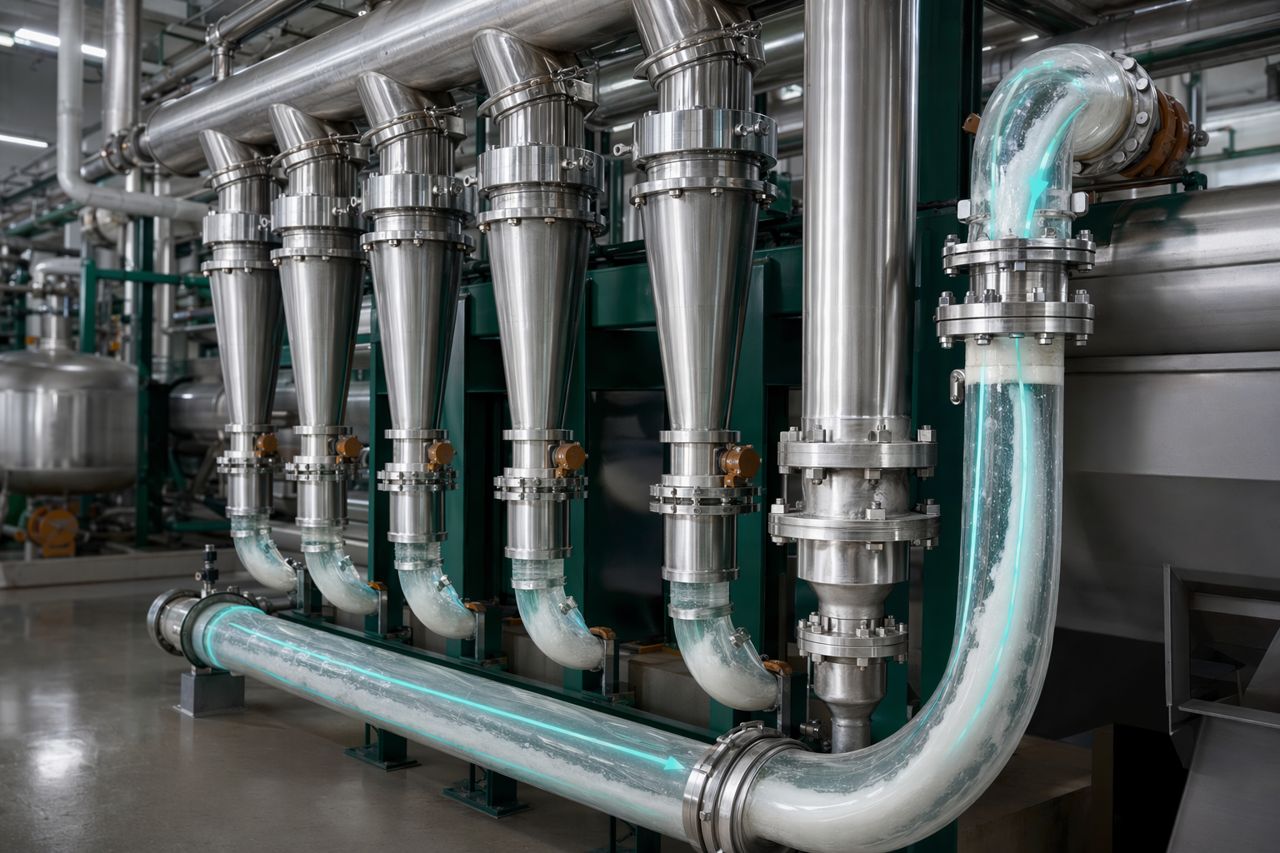
When hydrocyclones or separators respond unevenly to root variability, improved upstream slurry behavior can support more consistent separation.
Recovering starch earlier can help reduce avoidable solids in water circuits and lower the burden on clarification and effluent handling.
A ManiFlow trial is built around production reality. We define the baseline, agree on operating boundaries, run a controlled treatment period, and compare the right indicators.
Typical trial focus areas include:
The goal is to confirm that the enzyme improves recovery without creating surprises for the mill team.
Cassava roots change by season, supplier, age, and field condition. A recovery enzyme has to tolerate that variability while remaining practical for everyday operation.
ManiFlow brings:
We help you reduce hidden starch loss without disrupting uptime.
This page includes a short faceless explainer showing cassava roots entering the line, starch granules trapped in fiber, enzyme-assisted matrix loosening, smoother slurry movement, and more stable separation.
No avatar. No gimmicks. Just the process view your team recognizes.
Tell us about your cassava throughput, extraction pain points, and current recovery targets. ManiFlow will recommend a suitable tapioca starch recovery enzyme program and trial approach.
Tell us your application and volume — we reply with pricing and lead time.